Showing posts sorted by relevance for query books for reading. Sort by date Show all posts

Thursday, December 18, 2014

Gheorghemas Day Seven (of a Possible Dozen)

On the seventh day of Gheorghemas, Big Gheorghe gave to me...


Seven Books For Reading (Seriously)

Six Beers Worth Drinking

A fiiiiifth Golden Ring..... (please?)

Four Years of Marcus;

Three Scummers Picking;

Two albums to look forward to; and

A fat guy in a jersey

Last year, I read twenty-two books (according to my Gheorghemas post). Not too shabby, if you look at how many books most Americans read each year. And many of these books were either long or difficult . . . or both: Infinite Jest, The Goldfinch, Far From the Tree, Columbine, etc

Congrats to me.

Though I titled last year's post Seven Books for Reading, it might have been better titled: Seven Books You Can Brag That You Read (To Other Elitist Bastards). I'm proud I powered through them, but I'm not sure they were practical recommendations.

This year, however, was different. This year I read a shitload of books-- many of them short and many of them easy (two superb traits that our fearless leader Rob possesses). Plus, I was really sick in the spring with the flu and bronchitis, and I went on a cross-country trip for much of the summer. So I had some serious reading opportunities. I am proud to say that I read forty-six books, and many of them are actually books for reading: crime fiction and travel and sports and financial stuff. Here are the seven most memorable-- and I've included the covers so you can judge them:

1) The Sixth Extinction: an Unnatural History by Elizabeth Kolbert


Megafauna and an impending biological apocalypse (if you're partial to humans). This is the only "serious" book on the list, but it's vivid, surprisingly readable, and contains information vital to human survival-- so you might want to skip it and move down to the crime-thrillers.

2) The Cold Cold Ground by Adrian Mckinty


It's 1981, and a hipster Catholic cop (who is partial to The Clash) treads some dangerous ground: he's a member of the Belfast RUC, the mainly Protestant police force . . . and being the token Catholic on the force is difficult enough, but he's also simultaneously dealing with the constant civil unrest and a bona fide serial killer. Read the trilogy.

3) Play Their Hearts Out: A Coach, His Star Recruit, and the Youth Basketball Machine by George Dohrmann


If you're a parent and/or a coach, you need to read this book. It's a wild ride, full of highs and lows, despicable characters and inspirational moments, and it will change the way you view youth sports. A Mark recommendation.

4) The Power of the Dog by Don Winslow


I read this in August, while I sat on the beach at Sea Isle City, surrounded by my friends and family. While they laughed and had good times, I was immersed in a world of DEA agents, drug cartels, and torture. LOTS of torture. Winslow reads like a blend of two of my favorite authors: James Ellroy and Elmore Leonard; after I read this one, I went on a Winslow binge: Savages, The Winter of Frankie Machine, The Dawn Patrol . . . they are all worth reading.

5) Ready Player One by Ernest Kline


This book was so entertaining that I felt guilty while reading it. I recommend it to anyone enjoys references to Joust, Zork, TRS-80, War Games, Pac Man, John Hughes, Dungeons and Dragons, and things of that ilk.

6) Another Great Day at Sea: Life Aboard the U.S.S. George H. W. Bush by Geoff Dyer

British critic Geoff Dyer is a professional grouch and a fantastic writer-- I'll read just about anything he writes (even an entire book about a nearly unwatchable science-fiction movie).  To write this relatively short book, he crammed his long and rangy body into an aircraft carrier for a few weeks; then, in spectacular Geoff Dyer fashion,  he just hung around, complained a bit, and observed how things went: his insight is alternately absurd and inspirational . . . and if you've never been in the military, then this book is not only entertaining, but it's also educational (warning: if you're on the flight deck, watch out for the cables!)

7) A three way tie: Flash Boys, David and Goliath, and Think Like a Freak

Michael Lewis, Malcolm Gladwell, and the Levitt/Dubner duo have been churning out some of the slickest, most entertaining, and totally excellent non-fiction ever written. Even though these these three books will probably be considered minor efforts in their collective oeuvre, they were still totally entertaining and totally worth reading. Flash Boys sheds light on the dark and weird world of high-frequency trading; David and Goliath turns multiple underdog stories upside-down; and Think Like a Freak explains what David Lee Roth and King Solomon have in common.

Below is my entire list of books from 2014. Right now I am reading The Gentleman's Hour by Don Winslow and A History of the American People by Paul Johnson. I will certainly finish the Winslow book; it's a crime thriller set in San Diego-- lots of surfing, drugs, and male camaraderie, but I doubt I will get through the Paul Johnson tome . . . but there's always next year.

The Unwinding: An Inner History of the New AmericaAfter the Music Stopped: The Financial Crisis, the Response, and the Work Ahead , What I Learned Losing a Million DollarsThe Cold Cold GroundAmerican Hippopotamus , Play Their Hearts Out: A Coach, His Star Recruit, and the Youth Basketball MachineFutebol: The Brazilian Way of LifeLooking for AlaskaThe Lizard King: The True Crimes and Passions of the World's Greatest Reptile SmugglersThe Improbability PrincipleThe Sixth Extinction: An Unnatural HistoryThe InterestingsDare MeAll Joy and No Fun: The Paradox of Modern ParenthoodBrain on Fire: My Month of MadnessYou Should Have KnownDog SoldiersLost in My Own BackyardExpiration DateThe Improbability PrincipleFlash BoysThe Noble Hustle: Poker, Beef Jerky and DeathIt's Complicated: the social lives of networked teensStuff Matters: Exploring the Marvelous Materials that Shape Our Man-Made WorldAnother Great Day at Sea: Life Aboard the USS George H.W. BushNo Place to Hide: Edward Snowden, the NSA, and the U.S. Surveillance State Travels with CharleyThe Lost ContinentUngifted: Intelligence Redefined, The Truth About Talent, Practice, Creativity, and the Many Paths to Greatness Empire's Workshop: Latin America, the United States, and the Rise of the New ImperialismPower of the DogThe Second Machine Age: Work, Progress, and Prosperity in a Time of Brilliant TechnologiesI Hear the Sirens in the StreetDavid and Goliath: Underdogs, Misfits, and the Art of Battling GiantsUncharted: Big Data as a Lens on Human CultureThink Like a FreakBad Land: An American RomanceShelterReady Player OneThe Fever Over EasyThe Teacher Wars: A History of America's Most Embattled ProfessionSavagesThe Winter of Frankie MachineDawn PatrolHow We Got to Now: Six Innovations That Made the Modern World 

Thursday, December 19, 2024

The Twelve Days of Gheorghemas: Day Seven

On the seventh day of Gheorghemas,

Big Gheorghe gave to me . . . Seven Things for Reading


Let me start by saying this has been a GREAT year for reading, the greatest year for reading in quite a while for me-- and this is not due to any particular book but instead due to some excellent technology (and an excellent platform to help utilize the technology).

Without further fanfare, the tech:

1. The Kindle Scribe

Last spring, I traded in my puny and feeble original Kindle and I sprung for a gigantic Kindle Scribe. This is out of character for me but it was on sale. Normally, because I am environmentally conscious (and cheap) I never buy new tech when I have serviceable old tech (this is why I still have an Android phone from 2020 and I can't join the morning basketball confirmation group chat so my wife has to have it on her iPhone and let's just say that those guys send a lot of GIFs and she's not very happy about it).

But this Kindle Scribe is awesome, so awesome that my friend Ann creates a new name for whenever she sees it-- Kindle Max, Kindle Grande, Kindle Ultimate, Kindle Colossal, etc.-- because I make all other Kindle users look lame and pathetic.

This Kindle is my version of a midlife crisis purchase-- this is my big pickup truck, fast motorcycle, and expensive sports car rolled up into one gadget. I can't express how virile, potent, and utterly dominant I feel when I pull this thing out at the beach, and the regular-sized Kindle users hide their devices in shame. And you can make the font really big! You can write notes on it as well. It's the bomb-- and as my eyes get worse and worse from grading high school essays, this thing is a real boon. Highly recommended.

And, if you get a Kindle Scribe, then you're going to need to frequent this platform:

2. BookBub

I fucking love BookBub. You CAN get free books for your Kindle on Libby, the library app, but then you only have two weeks to read the book and there is often a long wait (and Libby doesn't have everything). But BookBub is a free service that recommends the best digital books that are on sale. Usually for $1.99. And there's an algorithm and some shit to check off, so you get recs that are in your wheelhouse, for the most part.

As a result, I am stocked up on books on my Kindle. If the apocalypse comes and I break my glasses, like Burgess Meredith in that great Twilight Zone episode "Time Enough at Last," I will be just fine. Because you can make the font so big! I wouldn't need any glasses!

Dammit. I wish I sprung for a Kindle Scribe . . .

Anyway, BookBub culls Amazon for deals and sends an email every day with recommendations that are on sale. Right now I am reading The Long Island Compromise by Taffy Brodesser-Akner, which I purchased for $1.99. The meaning of the title is worth that much alone (it's filthy).

I actually need to stop purchasing digital books and start on the massive backlog of books I've already purchased, books including but not limited to: The Witch Elm by Tana French, The Physics of Life: The Evolution of Everything by Adrian Bejan, Spin by Robert Charles Wilson, The Truth and Other Stories by Stanislaw Lem, Growth: From Microorganisms to Megacities by Vaclav Smil, The Rise and Fall of the Dinosaurs by Steve Brusette, and Embassytown by China Mieville.


And now I should recommend some actual books . . .

3. Magpie Murders and all of the Hawthorne mysteries.

Anthony Horowitz is the master of the meta-mystery. If you need more information than that, you could read my individual reviews about these books or listen to a We Defy Augury podcast episode I did on this topic.

Or you could just trust me.

4. Everyone Who Is Gone Is Here: The United States, Central America, and the Making of a Crisis by Jonathan Blitzer
This is the ugly story of how we helped to destabilize a lot of governments in Central America and how much of the border crisis is related to our meddling. Not fun, but required reading.

5. The Day of the Triffids by John Wyndham
A fast-paced classic post-apocalyptic tale. Totally entertaining.

6. The Fifties by David Halberstam
Comprehensive and smart. The fifties were more dynamic than you might imagine. I've heard Halberstam's The Breaks of the Game is one of the best sports books ever written-- he reports on the 1979-80 Portland Trailblazers and widens the lens to all kinds of issues-- so hopefully I'll read that one in the near future.

7. The New Me and Banal Nightmare by Halle Butler
These two books really amplified my understanding of listless millennial women . . . and both are funny as all hell.

Happy Georghemas and Happy Reading!

Large font fucking rules!

Monday, December 21, 2015

The Twelve Days of Gheorghemas: Day Seven

On the seventh day of Gheorghemas, Big Gheorghe gave to me:

Seven books for reading
6.9 Non Sequiturs
Six All-Star Nods
Five podcasts for listening
Four posts zman meant to write but never did
Three French Hens
Two in-state rivalries
And a dork with a split personal-ity


This is year three of my "seven books for reading" post, so now I've got some big data to evaluate. In 2013, I read approximately twenty-three books. In 2014, I read approximately forty-six books. This year I split the difference and read approximately thirty-three books. It's much easier for me to figure this out these days . . . thanks to T.J.'s gentle encouragement, I've finally learned to use the "labels" feature on Blogger.

It's always hard to choose the seven best, as all the books I finished were pretty damned good . . . that's why I finished them. I'm a finicky reader, and I start more books than I finish. Here are the seven most memorable.

1) Beyond Words: What Animals Think and Feel (Carl Safina)


The most significant and groundbreaking book on the list. Comprehensive, and a bit of a bear to get through (especially the first two sections, which focus on elephants and wolves) but I promise it will be worth it, and you'll never look at your dog in the same way again.

2) Savage Harvest: A Tale of Cannibals, Colonialism, and Michael Rockefeller's Tragic Quest for Primitive Art (Carl Hoffman)


The title says it all. Rich kids and cannibals mix like oil and water.

3) Dreamland: The True Tale of America's Opiate Epidemic (Sam Quinones)

Astounding journalism. America does a lot of drugs. Mexico produces a lot of drugs. God is in the details. The book inspired this song.

4) The Cartel (Don Winslow)

I can't get enough of Don Winslow, and I can't get enough of the Mexican drug trade. Part fact and part fiction, the sequel to The Power of the Dog, and a perfect companion to the previous book.

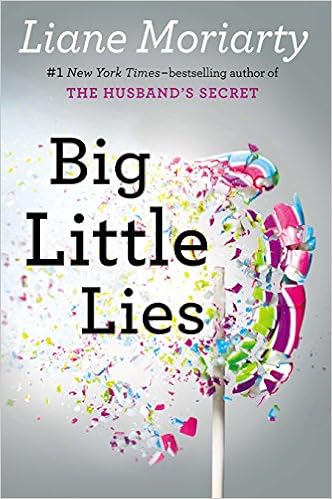
5) Big Little Lies (Liane Moriarty)


The Australian version of Mean Girls . . . except with mean moms.

6) Dancing With the Devil in the City of God: Rio de Janeiro on the Brink (Juliana Barbassa)

An honest and dynamic portrait of Rio . . . if you've seen City of God, you'll love this book.


7) City of Bones (Michael Connelly)

I'm choosing this particular Michael Connelly novel over all the other ones I have read only because it features the La Brea Tar Pits. I've read a number of his Harry Bosch crime procedurals and they're all fantastic (I'm in the middle of Trunk Music right now).


Before my list of all the books I finished, I'll give you something more interesting and less annoying: here are a few of the books I didn't finish . . .

1) Walter R. Borneman's 1812: The War That Forged a Nation

I really wanted to finish this book and become an expert on the War of 1812, but I couldn't read more than two paragraphs in a row before falling into a very deep sleep.

2) The Witches: Salem, 1692 (Stacy Schiff)

I was really excited to read this book, and I've never been so disappointed. After a beautifully written start, about how alienated and lonesome the Puritans were, strangers in a strange land, living in small dark smoky houses, describing events as if they were on a "low grade acid trip," this book devolves into fragmented declarative sentences of historical minutia, with no overarching structure or theme. I think Schiff's research possessed her soul and destroyed it.

3) Purity (Jonathan Franzen)

Another one I was excited about, but I'll never read Jonathan Franzen again. His characters are wooden, repetitive and despicable, and while he writes great sentences, I'm not sure he knows shit about human nature. I'd rather spend my time reading well-researched non-fiction.

4) Sy Montgomery's book The Soul of an Octopus: A Surprising Exploration into the Wonder of Consciousness

Well-written and fascinating, but just too much octopus.

Here's the list of the books I finished in 2015:

Savage Harvest: A Tale of Cannibals, Colonialism, and Michael Rockefeller's Tragic Quest for Primitive Art (Carl Hoffman)

Big Little Lies (Liane Moriarty)

The Best American Science and Nature Writing (2014 Edition)

The Happiest People in the World (Brock Clark)

Building a Better Teacher: How Teaching Works (and How to Teach It to Everyone) (Elizabeth Green)

The Fifth Witness (Michael Connelly)

City of Bones (Michael Connelly)

The Drop (Michael Connelly)

The Black Ice (Michael Connelly)

The Concrete Blonde (Michael Connelly)

The Last Coyote (Michael Connelly)

Skeleton Road (Val McDermid)

Why Does the World Exist? An Existential Detective Story (Jim Holt)

When to Rob a Bank and 131 More Warped Suggestions and Well-intentioned Rants (Levitt and Dubner)

The Husband's Secret (Liane Moriarty)

Dreamland: The True Tale of America's Opiate Epidemic (Sam Quinones)

How We Learn: The Surprising Truth About When, Where and Why It Happens (Benedict Carey)

The Next Species: The Future of Evolution in the Aftermath of Man (Michael Tennesen)

The Son (Jo Nesbo)

The Cartel (Don Winslow)

What Alice Forgot (Liane Moriarty)

Breakfast of Champions (Kurt Vonnegut)

Joyland (Stephen King)

Tell No One (Harlan Coben)

Dancing With the Devil in the City of God: Rio de Janeiro on the Brink (Juliana Barbassa)

Finders Keepers (Stephen King)

The Hand That Feeds You (Amy Hempel and Jill Ciment)

Before the Storm: Barry Goldwater and the Unmaking of the American Consensus (Rick Perlstein)

The Captive Condition (Kevin P. Keating)

Beyond Words: What Animals Think and Feel (Carl Safina)

The Dick Gibson Show (Stanley Elkin)

A Doll's House (Henrik Ibsen)

Overwhelmed: Work, Love and Play When No one Has the Time (Brigid Schulte)

Sunday, December 24, 2023

The Twelve Days of Gheorghemas: Day Ten

On the tenth day of Gheorghemas 

Big Gheorghe gave to me...

Top Ten Reasons to Read a Book

Last night, the Ghost of Gheorghemas Past manifested himself in an otherwise sexy dream involving several tall and leggy Eastern European tennis players. Upon sight of the Ghost, the ladies scattered and it was just me and a very tall specter. And he was angry. All seven foot seven of him. 

“Where are the seven books for reading?” 

The Ghost of Gheorghemas Past asked this question in a very spooky voice. Deep and full of robotic distortion. 

He sounded like this:

Though I was scared, I had a bunch of opinions I wanted to share-- and it turns out I'm more garrulous, vociferous, and long-winded than I am frightened of very tall phantasms.

So I sat him down on the end of my bed (he was too tall to talk to while standing up) and I told him what's what. First, I went on a long-winded tirade about the rampant materialism, environmental devastation, bumper-to-bumper traffic, and unreasonable expectations surrounding the holidays.  He seemed receptive to my complaints. 

I went on to explain that seven reading recommendations were just too many recommendations. Burdensome. Overwhelming. That's the problem with all these end-of-the-year lists: they're always too long . . . and don't get me started about "recency bias."

Hey internet! Here's some advice! Stop being so haphazard and desultory! Tell me the one movie I should watch, the one book I should read, and the one album I should listen to. 

You might also want to delineate the five thousand+ TikTok videos I should consume to truly understand the youth that I teach. 

And what percentage of these videos are "mukbang"?

The problem here-- and this is certainly a First World problem-- is that I read 46 books this year and I enjoyed quite a few of them. It's really hard to recommend just one or two. You can, of course, go down the rabbit hole and listen to my podcast, We Defy Augury, which contains all my tangential thoughts on what I've read this year-- but I'm not necessarily recommending that . . . I'm just shamelessly cross-promoting to annoy Marls.

So now, in complete contradiction to what I've just declared, I'm going to recommend a random amount of books because I can't really choose among my favorites. Just pick one of these and read it. You won't be disappointed.

If you're looking for a fast-paced novel in an exotic location, you can't go wrong with Birnam Wood by New Zealander Eleanor Catton. It's an eco-thriller that pits the hippies vs. the plutocrats. It's a trip. 

Here are two BIG novels you can really get lost in:

The Little Friend by Donna Tartt. Southern Gothic to the max. 

Wellness by Nathan Hill. Probably the best novel of the year, but only read it if you're willing to reflect on the institution of marriage.

As far as non-fiction . . .

If you're getting amped up for the upcoming political shitshow, it might be good to take a step back and read Under the Eye of Power: How Fear of Secret Societies Shapes American Democracy by Colin Dickey. 

Dickey's comprehensive narrative on how secret societies and conspiratorial thinking have intermittently reared their ugly heads and influenced our democratic process might not make you feel wonderful about the near future, but at least you'll realize that this era of misinformation and polarization is nothing new: politicians have always galvanized conspiracy theories and populist support for votes and power, and this too shall pass.

If you don't want to think about the upcoming political shitshow and instead you want to reflect on your musical taste and just why you listen to the stuff you listen to (and why everyone listens to complete crap) then I have two truly excellent recommendations for you:

This Is What It Sounds Like: What the Music You Love Says About You by Susan Rogers and Ogi Ogas. 

Let's Talk About Love: Why Other People Have Such Bad Taste by Carl Wilson

Anyway, that's probably too many recommendations-- but perhaps they will appease the Ghost of Gheorghemas Past and he'll stop barging into my sexy dreams.

If you're really balls-out-committed to doing some reading in 2024, you can join me and the 99% Invisible gang and read Robert Caro's masterpiece The Power Broker. It's a 1200-page biography of Robert Moses, the paradoxical populist visionary/ruthless autocrat/car-loving douche-bag who simultaneously improved and destroyed New York City and its environs. It's also Conan O'Brien's favorite book. I bought a hardcover copy as an early Xmas gift-- it's absurdly enormous. I'm already on page 200!


And now, on to the Top Ten List . . . Letterman style? Maybe . . . I vaguely remember these from when I was a kid.


Top Ten Reasons to Read a Book


10. You can’t get genital herpes from reading in bed (unless your wife is a whore).

9. It's better than the movie.

8. Reading is the best way to own the libs.

7. A book won’t sell your personal data.

6. Looking for a good night's sleep? Reading is almost as soporific as NyQuil.

5. When you read, you learn things . . . 


The looser the waistband, the deeper the quicksand or, so I have read.


4. Hey hipster! Reading is more fun than learning to knit.

3. When you finish The Power Broker, Robert Caro might send you a congratulatory t-shirt.

2. It's not like you're doing well with the ladies.

1. If you don't read Communion by Whitley Strieber, then how else are you going to learn the unadulterated truth about alien abductions?


Happy Holidays, Gheorghies.

Tuesday, December 17, 2019

The Twelve Days of Gheorghemas Day Seven (Seven Books for Reading)

On the seventh day of Gheorghemas
Big Gheorghe gave to me:

Seven Books for Reading
Six Vinyl Discs
Five golden (Cream Yellow, really) cylinders for Squeaky
Four players playing
Three Nutty Squirrels
Two Chilean bangers (literally)
And a British lass slingin’ hot meat

Aloha Gheorghies. I hope some of you read my #1 book pick for 2019. It's by Sam Anderson and the title is a mouthful:

Boom Town: The Fantastical Saga of Oklahoma City, Its Chaotic Founding, Its Apocalyptic Weather, Its Purloined Basketball Team, and the Dream of Becoming a World Class Metropolis

If you didn't read it, you still can. That's the thing about books. And, unlike The Sixth Sense, I doubt anyone has spoiled it for you.

Unlike last year, when I recommended a book that was perfectly apropos for the G:TB-- a fast and easy read about basketball, alternative music, tornadoes, and a clusterfuck on the prairie-- this year I'm going to challenge you motherfuckers.

My number one pick is a trilogy. A sci-fi trilogy. One of the hardest things I ever read. Translated from Chinese. Epic in scope. Groundbreaking. Some people in my office started but no one made it past the first book (and I'm an English teacher). My buddy Alec, who read all of Neal Stephenson's Anathem, quit halfway through book two. But I persevered and it was worth it. I thought I was the only person in New Jersey to finish all three books. Then my friend Melanie told she had whipped through them as well. No problem. So I guess they're not THAT difficult (although Melanie's pretty smart . . . for a girl). So go for it, I promise it will be worth it.

1) The Three-Body Problem by Cixin Liu

2) The Dark Forest by Cixin Liu

3) Death's End by Cixin Liu

The next pick is a fast and furious read. It's one of those non-fiction stories that will stretch the imagination of all you East Coast agnostics. Tara Westover survives being homeschooled by a fanatically religious, preparing-for-the-apocalypse, fighting Big Medicine, scrapmetal-baron nut job of a dad; while she is mercilessly manipulated and bullied by her older brother, and mainly left to fend for herself by a brainwashed, homeopathic midwife mom. In underdog fashion-- broken and corrupted of memory and normality-- she escapes her family and the mountains of Idaho and finally thrives.

4) Educated by Tara Westbrook

If-- instead of fishing and golfing-- you'd rather your retirement consist of going out into the universe and killing stuff, then read:

5) Old Man's War by John Scalzi

If heroin and oxycontin don't scare you enough, then check out:

6) Fentanyl, Inc.: How Rogue Chemists Are Creating the Deadliest Wave of the Opioid Epidemic by Ben Westhoff

I could also recommend Westhoff's Original Gangstas: The Untold Story of Dr. Dre, Eazy-E, Ice Cube, Tupac Shakur, and the Birth of West Coast Rap for Zman and Mark, but the rest of you may find this book a little too comprehensive and detailed. It's a great story though, especially how the gangsta rappers actually started to live up to their lyrics, instead of the reverse. Cause and effect go in reverse, and things end tragically.

Also, Eazy-E had ten kids by eight different women. I need to get busy, if I'm going to leave a legacy like that.

And while I know Malcolm Gladwell has taken some flak lately, especially in intellectual circles, for being a "thought leader" and sometimes playing fast and loose with his research, I love him as a writer. He makes non-fiction compelling and clear and in his newest book, he really brings his themes full circle. Also, his examples are topical and vividly executed. If you haven't read a Gladwell since Blink, this is a good way to get back into him.

7) Talking to Strangers: What We Should Know About The People We Don’t Know by Malcolm Gladwell

Enough of this post. I'm going upstairs to read Say Nothing: A True Story of Murder and Memory in Northern Ireland. Supposed to be really good.

Put some of your 2020 book picks in the comments.

Friday, December 15, 2017

The Twelve Days of Gheorghemas: Day Seven

On the Seventh Day of Gheorghemas, Big Gheorghe Gave to Me

Seven Books for Reading
Six decades of Fairbank
Five bits and bobs
Four reasons to save 68 CDs
Three balls a-rainin'
Two more automotive wormhole websites
And a bald guy and some random hor-seys


Day Six is a tough act to follow-- especially since I'm posting a half-assed list cannibalized from Sentence of Dave-- but Dave Fairbank's post definitely got me thinking about the things I love and appreciate in my life. Some of those things reside close to home (my wife, kids, dog, and friends; playing and coaching sports and my guitar) some of them exist in what now seems like another galaxy, far far away: the mountains of Vermont and Colorado, the desert and badlands of New Mexico and South Dakota; the beaches and jungles of Thailand and Ecuador, the ancient ruins of Syria, Egypt, Lebanon, and Jordan. I would love to return to these places and explore them more thoroughly, perhaps even move permanently to one of them, but I don't think that's happening for a number of years (at least not until my kids move out).

Anyway, one of the things I appreciate very much is reading, especially reading a good book. This is different than reading a magazine, which I still do (though it's totally retro) and it is certainly different than reading stuff on the internet. I feel like the sustained attention you give to an entire book is a special event. It's recursive, introspective, slow, and profoundly relaxing. Essentially the opposite of Twitter.


Lately, I've had some extra time to read (and play the guitar) because for the first time in 40 years, I haven't spent three hours a week watching the Giants (or any NFL football). We cut the cable at the end of the summer and our household is relying purely on high speed internet, a Netflix account, and "borrowed" passwords for screen entertainment. But mainly I read, and I'm proud to say that this year, I finished 44 books-- I'll put up the complete list on SoD at the end of the year-- and I'm halfway through Richard White's monstrous tome The Republic for Which It Stands: The United States During Reconstruction and the Gilded Age, 1865-1896, which is excellent (and should count as two books because it is so long). I would include it on this list, but this list is books for reading, not books for crawling your way through at a snail's pace. I will give you a quick summary of the story so far: just because you free a bunch of slaves, doesn't mean that the former slave-owners are going to treat them well, and it doesn't mean that these former slaves are going to quickly assimilate into society and the economy. The term reconstruction is something of a euphemism.


Anyway, day six made me realize that reading is also one of those things that I hope I'll be able to count on in retirement (or semi-retirement, which seems more practical and likely). Once I start collecting my pension, I may not be able to move from New Jersey to Colorado or Thailand or even the Outer Banks or Vermont-- that's going to depend on the health of my parents, the financial stability of my kids, and my wife's desires and plans-- but I'm pretty sure libraries will still exist and-- if my eyes get really bad I could always . . .

enlarge the fuck out of the font on the Kindle.

I will begin my list with a fantastic book that I just finished. This book is free on the Kindle, because as Zman pointed out, the the copyright has expired. Public domain! You don't even have to pay for the paper it's printed on. I will definitely be taking advantage of all these public domain freebies when I'm semi-retired and greeting folks at Wal-Mart (because the pension system imploded).

1) The Moonstone by Wilkie Collins

Though it was published in 1868 and the story is told by an extensive epistolary spiral of narrators, this archetypal detective novel is totally readable. It's not just for English teachers. The book has all the typical classic mystery elements--  the superb but oddly touched detective (Sergeant Cuff) and the ominous historical overtones (the British colonization of India) and a butler (spoiler: he didn't do it) and a spooky setting (moors and tidal quicksand) . . . and it's got a bunch of elements that would fit right into a modern thriller: opioid addiction, Orientalism, secularism (for Gabriel Betteredge, Robinson Crusoe operates as both the I Ching and the Bible) and-- most significantly-- what might be the first instance of a state dependent and context dependent memory encoding and retrieval experiment in literature. I won't spoil the how and why of this, but read the novel-- it's excellent and it's free on the Kindle. Free! Or you could save this one until you move to the beach, as there's some really evocative littoral images.

2) One Summer: America, 1927 by Bill Bryson

Bryson uses a few months to paint a portrait of an America rolling precipitously into strange, new places, even faster than the America of today: Babe Ruth and Lou Gehrig invented the home run derby, Sacco and Vanzetti were executed, Al Capone reigned, eugenics and involuntary sterilization were all the rage, Hollywood pumped out 800 feature length movies a year . . . and filmed it's first big "talkie," the Jazz Singer, Dempsey fought Tunney, The Federal Reserve cut interest rates which precipitated the stock market crash, Italians were regarded as a dangerous ethnic group, Gutzon Borglum began Mount Rushmore, Calvin Coolidge did nothing, the Mississippi flooded monumentally, Herbert Hoover supervised flood management, a lunatic blew up a school in Michigan and killed forty-four children, Henry Ford stopped production on the Model T Ford and began planning Fordlandia, a doomed model city and rubber plantation in Brazil, Shipwreck Kelly sat on a flagpole in Newark for 12 days, and Charles Lindbergh was adored by zillions, a consequence of his daring solo flight across the Atlantic (this is before his child was kidnapped, before he associated himself with the Nazis, and before it was discovered that he had several secret families).

3) Love Me Do! The Beatles Progress by Michael Braun

Love Me Do! The Beatles Progress is regarded by many credible sources as the best book about the Beatles and while I'm not the one to dispute this-- this is the only book about The Beatles I've read-- I think this is a great book on its own merits, a breakneck real-time gonzo journalism meditation on fame, mania, art, and celebrity. Michael Braun accompanies the Liverpudlians for several weeks of a world tour in 1963, just as Beatlemania is taking hold of the world-- and back in the early '60's, The Beatles presented a telling contrast to the three crooners of that era: Elvis, Frank Sinatra, and Cliff Richard . . . all three were very male and rather sexual. No one over twenty could understand what was going on with The Beatles, meanwhile teenagers, mainly girls, flocked anywhere that a Beatle might turn up, and Braun was there to document it all . . . this is a quick read-- a magical mystery tour that you should experience for yourself, but here are a few moments I highlighted on my Kindle (for the complete list, head over to Sentence of Dave).

Ringo Starr, 23 years old . . . "I don't care about politics . . . just people."

George Harrison, 21 years old: "I wouldn't do anything I didn't want to, would I?" and then explains his ambition is to design a guitar.

Paul McCartney, 22, would like "to be successful" and wants "money to do nothing with, money to have in case you wanted to do something."

John Lennon, 23, explains: "The more people you meet, the more you realize it's all a class thing."

And a harbinger . . . in New York, just before the Ed Sullivan appearance, Cynthia Lennon wanted to go out shopping but was afraid to venture out into the city alone, and she noted "the fans here seem a bit wackier than in England."


This is the book of the year. I'm posting my entire rambling review from SoD. I think I had PTSD when I wrote it.

Mark Bowden's new book Hue 1968: A Turning Point of the American War in Vietnam recounts the Tet Offensive, the capture of the ancient provincial capital city of Hue by the North Vietnamese, and the ensuing epic 24 day battle waged by the Marines and the ARVN to recapture the city . . . the book is over 500 pages and a monumental day-by-day account of the heroism, atrocities, propaganda, misinformation, strategy, blunders, civilian casualties, destruction of ancient wonders, Communist purges, political failures, and-- amidst great effort and honor-- the futility of top-down command in warfare . . . Bowden interviewed scores of people from both sides, so while he focuses on American perspectives and tells the stories of many, many Marines and reporters who were at Hue and witnessed the bloodiest battle in the war, he also recounts civilian and North Vietnamese perspectives of the tragic month; the sum total of this grueling depiction is the ultimate expression of "I support the troops but not the war," although at times it's even hard to support the troops, who often busy themselves shooting dogs and civilians, prying gold fillings from the teeth of the dead, and committing other acts that could only occur in the moral vacuum of a chaotic, street-to-street, house-to-house plodding assault, where young men watched their friends get shot in the streets, tried to retrieve the wounded, were consequently shot and on and on-- the book graphically describes the many many deaths and injuries-- the Marines were used as fodder and many are still angry about this, none of the people higher up the chain understood the amount of NVA in the Citadel, nor how well entrenched they were, or that their supply chains were intact . . . they didn't understand how well-trained the NVA soldiers were, the generals thought they could be brushed aside with little collateral damage, they didn't understand that the spider-holes, trenches, towers, turrets, snipers, and occupation of the city created a maze of interlocking fire that just devastated our troops, nor did the people calling the shots understand the North Vietnamese strategy, which was simply to hold onto the city as long as possible, cause as many casualties as possible, and-- though the NVA knew they would eventually lose the battle-- they would win the war, because the American people and media (including Walter Cronkite) would finally realize that it wasn't worth the effort . . . so while the Marines heroically took back the Citadel, the generals (Gen. Westmoreland specifically) didn't realize that the death toll, the destruction of the city and its historical wonders, and the civilian casualties would drive Lyndon Johnson to bow out of the presidential race, and completely change the strategy in Vietnam . . . while the capture of Hue did not foment a fervent Communist uprising, and-- in fact-- many of the people in Hue (an educated, upper-middle class city) tried to stay out of the war and not choose sides at all, many of these people, the ones not killed by the initial battle, were killed by the Communists in purges . . . it was horrible and ugly on both sides, the genetically engineered IR8 rice didn't do the trick, nor did the Hanoi government, and while the war would slog on for several more years, as we tried to "seek honorable peace," the lessons were obvious and while we have gotten mired in places we don't belong, we at least know now that we have to "win hearts and minds" in order to achieve any kind of lasting success in a foreign proxy war (not that we're immune to this sort of thing, despite what we learned, we still managed to concoct Abu Ghraib . . . but that's still a far cry from the treatment of the civilian "gooks" in Vietnam, there was very little thought of collateral damage by the soldiers and the generals, despite the fact that we weren't fighting a war against Vietnam, we were supposedly fighting a war for the Vietnamese people . . . what a fucking mess, read the book).


Monty Python and the Holy Grail meets Pillars of the Earth. Fast paced, genuinely funny, and surprisingly educational.


Another great Detective Sean Duffy mystery, set amidst the Troubles in Northern Ireland during the 1980's. Musical allusions, murder by crossbow, a Fenian in Belfast . . . what more could you ask for? Mckinty also makes the list because he stopped by Sentence of Dave to explain the origins of a humorous moment in the book. 


A strange and indescribable book for Primer fans. Gleick is masterful writer and I recommend all his books. This one is especially strange and philosophically compelling, and it includes Nabokov's version of time-travel: rereading a book. When you reread, you return to a text knowing the framework and then start to observe it as a whole, outside of the timescape of flipping pages and forward progress, and you know it differently . . . so there's another thing to look forward to: rereading all these great books sometime in the future and experiencing them as something new.

Tuesday, January 03, 2017

The Twelve Days of Gheorghemas: Day Eleven

On the eleventh day of Gheorghemas
Big Gheorghe gave to me:

Eleven books for reading

Ten (plus one) Months of Gheorghness
Nine cheers for Mike
Eight Miscellaneous Items - Probably for Next Christmas (or for yourself, or perhaps a fellow GTB'r right now, just cuz)
Seven (Give or Take) Voters (Should Be) Voting
Six Simpler Memories
Five shows to binge watch on TV
Four Random Thoughts
Three Punk Rock Playlists 
Two Digits Throughout History 
And the debut of Mac McFis-ty

Since this post goes to eleven (and some Gheorghies are watching Stranger Things) I'll start by revisiting my son Ian's Halloween costume. He looks almost as much like Eleven as I resemble Brad Pitt (when I face-swap with Stacey).


My annual book list also goes to eleven this year. It's no secret that I love to read, and I still get very excited when I'm in a good book . . . but I will readily admit that as I get older, it's harder for a book to engrave itself in my memory.

Can you read too much?

One thing inevitably reminds me of another, and I end up in a byzantine labyrinth of free-association. I think this may be a consequence of getting old. The same thing happens to me with movies and TV and stand-up comedy. And it happens with music, which drives me crazy.

Music doesn't have the same effect on me as it did when I was young, which is probably a good thing, as when I was young, music often drove me to violence, moshing, fisticuffs, warped and distorted ideas, capricious moodiness, and a general fanatical weirdness that is no longer age-appropriate.

But I miss that mainlining of emotion, the wild highs and lows. It happens occasionally, when I've had too many beers while cooking dinner and Google Play music tosses out a Liz Phair song that hits home, but it's rare. Normally, music evokes a much more manageable emotion: nostalgia. Nobody gets hurt and it's fun to have those moments, but it's not exactly The Cult at Hampton Coliseum, when I lost a pint of blood fighting for Ian Astbury's razor sharp tambourine in a mosh-pit (my friend John also had a grip on the tambourine, and he had to go to the ER for stitches . . . our blood was thin because we had been drinking with Whitney since 9 AM).

I have a hard time listening to new stuff, unless it's very different from what I used listen to. Which is why I listen to a lot of jazz and electronica, which is why my wife and kids often find whatever I'm listening to unbearable . . . although I did have a nice run this year: I totally dug the new Tribe Called Quest album, and this alerted me to the fact that I never listened to their first album, Instinctive Travels and the Paths of Rhythm . . . I started my Tribe Called Quest fandom with Low End Theory and never went backwards.

So I got a little bit of that "It Feels Like the First Time" feeling, and it felt good. But mainly, I've heard too much, seen too much, consumed too much, and while it's made me intelligent and well-versed it has also made me a bit calloused and jaded and rather cavalier. Everything reminds me of something else, or a combination of several things . . . Out of Africa meets Pretty Woman.

Whitney would attribute this to my mental age (91) and he's probably right . . . but that's another post.

The music metaphor also describes much of my reading.

According to Sentence of Dave, I read over forty books this year . . . which is fairly typical. If you project that over my life, it ends up being too many books, many of which are derivative. If were pressed, I could only recount a few in detail. The one surefire winner on this year's list is Death Comes to the Archbishop by Willa Cather. I reread it when we traveled to New Mexico, and I loved it even more than the first time I read it. So that one holds up.

As for the rest, who knows? I'm not sure that reading strengthens my mind. My brain is all clogged up, full of junk, it's a demented, disorganized, jumbled mess. Judging by the amount I've read, I should be smarter or have a better memory or be a better writer or something. I understand reading a book is a major commitment, and there's a good chance that you won't remember the details in ten years. Still, the process is meditative, and according to a recent study, book readers live longer than non-book readers. So while I can't assure you that these books will change your life, or that you'll remember them, they still might be worth reading.

This post is long enough, and I'm tired from our family vacation in Vermont, and so instead of providing blurbs, I've simply linked the titles to the Sentence of Dave summaries of each book.

Or just trust me, and take a couple of these titles out of your local library. That's what I do. What have you got to lose? True, the previous borrower may have taken your copy into the bathroom and perused it while taking a huge smelly dump . . . but you could exact vengeance on the next borrower and do the same thing . . .

Confession: while I try not to take library books into the john, I certainly stain a few pages of every book I check out with various foodstuffs.

Happy reading!

Weapons of Math Destruction: How Big Data Increases Inequality and Threatens Democracy by Cathy O'Neil

Hillbilly Elegy: A Memoir of Family and Culture in Crisis by J.D. Vance

The Underground Railroad by Colson Whitehead

The Short and Tragic Life of Robert Peace: A Brilliant Young Man Who Left Newark For the Ivy Leagues by Jeff Hobbs

Death Comes to the Archbishop by Willa Cather

The Milagro Beanfield War by John Nichols

Roadside Picnic by The Strugatsky Brothers

But What If We're Wrong?: Thinking About the Present as if It Were the Past by Chuck Klosterman

Sapiens: A Brief History of Humankind by Yuval Noah Harari

Seinfeldia by Jennifer Keishin Armstrong

The Nix by Nathan Hill

Wednesday, December 19, 2018

Twelve Days of Gheorghemas: Day Seven

On the seventh day of Gheorghemas, Big Gheorghe gave to me:

Seven Book Categories for Reading
Six Cylinders for Shlara
Five Givings of Thanks
Four Badass Women
Three(+) Decades of Love’s Labor
Two Things You’re Needing
And a Fat Guy in a Sweet T


I'm sure you're all sick of all the end of the year lists . . . the movies you didn't have time to see, the political events you finally forgot about, the celebrities that croaked. And the books you didn't read. So I'm going to make this as simple as I can.

I'm quite proud that I read forty-three books in 2018. Or I was quite proud, until my friend and colleague Stacey presented me with her book list. That's when I decided lists are stupid (it might have been sour grapes). It's really hard to recommend a good book, let alone 43 of them. Reading is deeply personal . . . it's a commitment. While I would love it if all my friends read the exact same books as me, at the exact same time, it's just not feasible. You can sample music or a TV show and then tell your buddy you tried, but a book takes more effort.

And a book recommendation is fraught with peril. You could really disappoint someone. They could think far less of you (this could happen with music and TV as well but we tend to excuse trash in those domains . . . if you think Here Comes Honey Boo Boo is the shit, I'm not going to bother arguing with you. But I'm still bickering with folks in my department about how contrived and lacking in hockey-insight Fredrik Bachman's novel Beartown is).

However, a good book recommendation is a wonderful thing. I'm still passing along George Dohrmann's Play Their Hearts Out: A Coach, His Star Recruit, and the Youth Basketball Machine, a book that Mark recommended.

So instead of recommending seven books, which is six too many, I'm going to recommend seven book categories. In each category, I'll recommend one or two books. I think that's reasonable.

I'm going to start with one over-arching recommendation, however. The first book is the one book on my list that all the Gheorghies should read. It is a surefire hit for this crowd, and I'm asking you to trust me on it. Oklahoma Thunder Basketball, tornadoes, The Flaming Lips, city planning, and the 1889  Land Run, all wrapped up in hurtling juggernaut headed towards the inevitable BOOM. Give it a shot, and then thank me when you finish it in three days.

1) The One Book All Gheorghies Need to Read 

Boom Town: The Fantastical Saga of Oklahoma City, Its Chaotic Founding, Its Apocalyptic Weather, Its Purloined Basketball Team, and the Dream of Becoming a World Class Metropolis by Sam Anderson

2) OBFT XXVI Book Club Selection

Cliffy (who runs a moving business) also enjoyed this one, which details-- in his words-- "America's first move." I would really enjoy if some of the fishing trip guys read this one, so we could discuss it in the appropriate setting.

The Secret Token: Myth, Obsession and the Search for the Lost Colony of Roanoke by Andrew Lawler

3) A Classic That's Worth Reading

This novel is regarded as "The Great Gatsby of the West Coast." I think it's a lot more fun than Fitzgerald.

Ask the Dust by John Fante

4) Two Books for the Whole Family

We had a family book club this summer, and my kids chose these two books. I loved both of them, and both made me cry (one is about dogs and the other has several underdog sporting moments).


A Dog's Purpose by W. Bruce Cameron

5) Two Books with BIG Ideas

These suckers are heavy, but I guarantee if you make it through either one (or both) you'll never look at the world the same way again. Both are comparable to Guns, Germs, and Steel.


6) Two Books That Will Make You Laugh

Nothing is harder than humor, and these are two authors at the top of their game. If you've never read Sedaris, you can start with this one and then work your way through. The best part about Schumacher's epistolary novel is that there's a sequel, which is more traditional in format, but just as funny.


7) Something Thoughtful and Political

The Coddling of the American Mind: How Good Intentions and Bad Ideas Are Setting Up a Generation for Failure by Greg Lukianoff and Jonathan Haidt

Merry Gheorghemas! Happy Reading!

If you'd like to join me, this winter I'm going to wade through Vietnam: An Epic Tragedy 1945 - 1975 by Max Hastings It's 900 pages, and it's supposed to arrive before Christmas.

There's no better way to celebrate the holidays than by being thankful you weren't drafted into a chaotic misguided quagmire of atrocities and futility (with flashes of honor, resourcefulness and heroism . . . often for lost causes).