Today marks the 25th anniversary of the release of the Beastie Boys' Ill Communication album. For my money, and that of many critics, the video for Sabotage from that record is the greatest video ever released.
If you've got 14 minutes and 30 seconds or so, watch this documentary about the years that led up to the record, which features an interview with the surviving Beasties. Really cool stuff about Yauch's awakening as a person and about how much fun the group had together. They set it straight, this Watergate.
Friday, May 31, 2019

Wednesday, May 29, 2019
Avalanche of TR Content
Inspired by the tiny dictator’s last comment, while we await TR’s reviews of the Topps baseball card sets of the 90’s here is some TR content to hold you over. Post count!!


Monday, May 27, 2019


Friday, May 24, 2019
Juxtaposition
When I was in my 20s, I spent hours - probably numbering in the hundreds - laughing at the same scenes played over and over again. Tractor beam, sucked me right in.
So it was more than a little interesting this week when I saw this guy:
Saying this:
It's a hell of time, friends. I think I'll just buy a six-pack.
So it was more than a little interesting this week when I saw this guy:
Saying this:
It's a hell of time, friends. I think I'll just buy a six-pack.
Tuesday, May 21, 2019
For Shame
Shame, boatloads of shame/Day after day, more of the same -- The Avett Brothers
Loath though I am to besmirch the good name of one of my favorite bands, that couplet does a nice job of describing the state of our once-proud nation. I've tried to refrain, with varying degrees of success, from running into this space to loudly rant about each degradation of our norms, each gross abdication of duty, each rationalization of egregious conduct in the name of power. But news comes this week of a potential act by the President* so beyond the pale, so outrageous, so disgusting, so damning in its indictment of his addled faux-macho worldview that I can't sit silently by.
 According to multiple outlets, Corporal Bone Spurs is seriously contemplating issuing pardons in time for Memorial Day to several American soldiers and contractors (read: mercenaries) accused or convicted of war crimes. These brave war heroes are alleged to have stabbed an unarmed and injured Iraqi to death, shot young girls and elderly Iraqis with a sniper rifle, opened fire on a crowd of unarmed Iraqis, killing 14, and desecrated the corpses of enemy combatants by urinating on them.
Our best and brightest, as you can see.
War is, as the hoary cliche goes, hell. I can't for a moment imagine the adrenaline-fueled fury that rises in a person in the midst of active combat. I'll never stare down an enemy who seeks to take my life, and never know the guilt, relief, and anger that comes with living through a firefight. U.S. servicemen and women are often heroic, and nearly always driven by a sense of duty to a cause greater than their own. I witnessed a version of this daily growing up in an Army household.
That sense of duty extends to the way we fight our wars. We're taught that Americans have to be better, to uphold our nation's values, to fight with honor lest we lose our command of the moral high ground. By pardoning crimes like these, even those committed in the midst of the fog of war, the message to the rest of the world is that our word is not to be trusted.
And the message to the overwhelming majority of American servicemen and women who fight our wars honorably amidst the most challenging of conditions is perhaps even worse. National security journalist Jonathan Ackerman, who tweets as @attackerman, posted this yesterday: "Those without honor esteem those without valor, and consider those who didn’t dishonor their uniform to be irresponsible. To excuse war criminals is to insult everyone who survived war — war, which, when not a matter of liberation, is a crime — with their humanity intact."
Excusing the illegal, immoral, and cowardly actions of the few in the name of some misguided tough-guy might-makes-right ethos is the apotheosis of our Commander-in-Chief's abjectly irresponsible approach to policy. He dishonors us every day. But in this instance, he dishonors some of the best among us.
Loath though I am to besmirch the good name of one of my favorite bands, that couplet does a nice job of describing the state of our once-proud nation. I've tried to refrain, with varying degrees of success, from running into this space to loudly rant about each degradation of our norms, each gross abdication of duty, each rationalization of egregious conduct in the name of power. But news comes this week of a potential act by the President* so beyond the pale, so outrageous, so disgusting, so damning in its indictment of his addled faux-macho worldview that I can't sit silently by.
According to multiple outlets, Corporal Bone Spurs is seriously contemplating issuing pardons in time for Memorial Day to several American soldiers and contractors (read: mercenaries) accused or convicted of war crimes. These brave war heroes are alleged to have stabbed an unarmed and injured Iraqi to death, shot young girls and elderly Iraqis with a sniper rifle, opened fire on a crowd of unarmed Iraqis, killing 14, and desecrated the corpses of enemy combatants by urinating on them.Our best and brightest, as you can see.
War is, as the hoary cliche goes, hell. I can't for a moment imagine the adrenaline-fueled fury that rises in a person in the midst of active combat. I'll never stare down an enemy who seeks to take my life, and never know the guilt, relief, and anger that comes with living through a firefight. U.S. servicemen and women are often heroic, and nearly always driven by a sense of duty to a cause greater than their own. I witnessed a version of this daily growing up in an Army household.
That sense of duty extends to the way we fight our wars. We're taught that Americans have to be better, to uphold our nation's values, to fight with honor lest we lose our command of the moral high ground. By pardoning crimes like these, even those committed in the midst of the fog of war, the message to the rest of the world is that our word is not to be trusted.
And the message to the overwhelming majority of American servicemen and women who fight our wars honorably amidst the most challenging of conditions is perhaps even worse. National security journalist Jonathan Ackerman, who tweets as @attackerman, posted this yesterday: "Those without honor esteem those without valor, and consider those who didn’t dishonor their uniform to be irresponsible. To excuse war criminals is to insult everyone who survived war — war, which, when not a matter of liberation, is a crime — with their humanity intact."
Excusing the illegal, immoral, and cowardly actions of the few in the name of some misguided tough-guy might-makes-right ethos is the apotheosis of our Commander-in-Chief's abjectly irresponsible approach to policy. He dishonors us every day. But in this instance, he dishonors some of the best among us.
Monday, May 20, 2019
#aroyalteamtalk
The English FA, BBC, and Prince William have joined forces to make visible an issue that plagues many, yet is still so hard to talk about. From this partnership, a video entitled, 'A Royal Team Talk: Tackling Mental Health', follows. Featuring several noteworthy professional players, including Peter Crouch, Thierry Henry, and Danny Rose, as well as England manager Gareth Southgate, the video juxtaposes the image of successful athletes at the top of their game with the pressures, anxiety, and mental issues that come with so many aspects of modern life. The piece also features four 'regular' blokes who struggle with anxiety and depression. This clip details the meeting of the two groups.
Important work being done here by HRH and the FA. More sunlight on this issue, more disinfectant, and perhaps less toxicity. A man can only hope.
“As a man, it’s almost forbidden to cry.”— BBC One (@BBCOne) May 19, 2019
Five of the biggest names in football and the Duke of Cambridge open up about mental health
#ARoyalTeamTalk #MakeExtraTime pic.twitter.com/f6QiQalakF
Important work being done here by HRH and the FA. More sunlight on this issue, more disinfectant, and perhaps less toxicity. A man can only hope.
Friday, May 17, 2019
You Could Get With This or You Could Get With That
Approaching the point in the evening where I've had enough to drink to make impulse purchase decisions, and I'm calling upon the assembled League of Gheorghies to crowdsource my choice.
In this corner, the primary Ardillas Voladoras logo cap:
 And in this corner, the alternate:
 Make your case in the comments.
In this corner, the primary Ardillas Voladoras logo cap:


Thursday, May 16, 2019
Gheorghe Explains the 2020 Democratic Presidential Primary (in Song)
Sung to the tune of The Nails' 88 Lines About 44 Women, our tribute to the Democratic Party's clusterfuck of a Presidential primary, 44 Lines About 22 Candidates, Maybe 4 of Which Have a Snowball's Chance in Hell:
Beto was a hipster dad
 Played punk rock and bounced around
Uncle Joe expects to win
Lays his hands upon your mom
Klobuchar is of the North
Winter's coming, she's below fourth
Jay Inslee, man, he loves the earth
Warren's EPA chief his berth
Mayor Pete's a boyish type
Way too smart for his own good
Gillibrand is smart and tough
Hard to break through all the noise
Bernie is a Socialist
Fucked up '16, back to wreak
Kamala prosecutes 'em
Woe to he who thinks her weak
Cory Booker, he's a vegan
Beard is pretty, his chances not
Tulsi's carving her own spot
Shame it's Syrian, loves despots
Steve Bullock is...
Who the fuck is Steve Bullock?
John Delaney...man, really?
Wayne Messam is...once again, I don't even know who these people are. Wayne Messam? Is that even a real person? Why would you run for office if you're the mayor of Miramar, Florida? I guess we could ask Pete Buttigieg the same thing, now that I think about it. Fuck, the meter is all wrong on this line. But seriously, many of these vainglorious assholes serve the party and the nation so much better if they'd run for Senate and try to deny Mitch McConnell two more years of packing the courts with misogynist Trumpian fuckbonnets.
Andrew Yang is interesting
Hates the robots, like Yoshimi
Tim Ryan is a typical white dude
Full of himself, not a clue
Swalwell, he is one to watch
Too moderate in this year of blue
Hickenlooper's fun to say
Buy his beer, but not his chances
Michael Bennet, generic white guy
Stick to the Senate, make them dance
 Moulton is an arrogant prick
Nancy Pelosi handed him his...jock
Julian Castro, Obama's Hud Sec
Bucking for a better spot
Gravel is a likeable loon
Keep him in just for the fun
Warren always has a plan
Total package; she's the one
Beto was a hipster dad

Uncle Joe expects to win
Lays his hands upon your mom
Klobuchar is of the North
Winter's coming, she's below fourth
Jay Inslee, man, he loves the earth
Warren's EPA chief his berth
Mayor Pete's a boyish type
Way too smart for his own good
Gillibrand is smart and tough
Hard to break through all the noise
Bernie is a Socialist
Fucked up '16, back to wreak
Kamala prosecutes 'em
Woe to he who thinks her weak
 |
| This is Steve Bullock. Or some dude from my office. |
Cory Booker, he's a vegan
Beard is pretty, his chances not
Tulsi's carving her own spot
Shame it's Syrian, loves despots
Steve Bullock is...
Who the fuck is Steve Bullock?
John Delaney...man, really?
Wayne Messam is...once again, I don't even know who these people are. Wayne Messam? Is that even a real person? Why would you run for office if you're the mayor of Miramar, Florida? I guess we could ask Pete Buttigieg the same thing, now that I think about it. Fuck, the meter is all wrong on this line. But seriously, many of these vainglorious assholes serve the party and the nation so much better if they'd run for Senate and try to deny Mitch McConnell two more years of packing the courts with misogynist Trumpian fuckbonnets.
 |
| Hickenloopermentum! |
Hates the robots, like Yoshimi
Tim Ryan is a typical white dude
Full of himself, not a clue
Swalwell, he is one to watch
Too moderate in this year of blue
Hickenlooper's fun to say
Buy his beer, but not his chances
Michael Bennet, generic white guy
Stick to the Senate, make them dance
 Moulton is an arrogant prick
Nancy Pelosi handed him his...jock
Julian Castro, Obama's Hud Sec
Bucking for a better spot
Gravel is a likeable loon
Keep him in just for the fun
Warren always has a plan
Total package; she's the one
Tuesday, May 14, 2019
RIP, Tim Conway
Tim Conway, famed for his role on The Carol Burnett Show, passed away today at 84. I haven't seen that show in years, but I recall watching it as a kid, and laughing as much at my father nearly pissing himself as at the sketches.
Here's a famous one where Harvey Korman legendarily actually did piss himself at Conway's performance:
And here's Conway telling the story of that sketch to Conan O'Brien:
Here's a famous one where Harvey Korman legendarily actually did piss himself at Conway's performance:
And here's Conway telling the story of that sketch to Conan O'Brien:
Monday, May 13, 2019
Hot Truth Filler
Amplify the truth. Shout down the voices of people who seek to profit from lies, episode one:
Saturday, May 11, 2019
If You Can't Say It, You Can't Do It
It's been a big fucking week, my friends. In 2017, a groundbreaking study from Stanford University "...found a consistent positive relationship between profanity and honesty; profanity was associated with less lying and deception at the individual level, and with higher integrity at the society level".
Then, early last year, Emma Byrne published Swearing Is Good for You: The Amazing Science of Bad Language, which extolled the virtues of colorful language, from enhancing workplace teamwork to increasing our pain tolerance.
Finally, this week, we moved more deeply into the golden era of the f-bomb.
First, in England, Liverpool manager Jurgen Klopp, at a loss for prosaic verbiage to describe his team's epic Champions League semifinal comeback, said this (the whole thing is great, but the money quote starts around 1:08):
Then, a day later, Golden State Warriors coach, after his team overcame the loss of Kevin Durant to beat Houston in Game 5 of their Western Conference semifinal series, channeled Klopp. Literally:
Both of those teams have mammoth games this weekend, and potentially through June. May their leaders bring their fucking 'A' games.
Then, early last year, Emma Byrne published Swearing Is Good for You: The Amazing Science of Bad Language, which extolled the virtues of colorful language, from enhancing workplace teamwork to increasing our pain tolerance.
Finally, this week, we moved more deeply into the golden era of the f-bomb.
First, in England, Liverpool manager Jurgen Klopp, at a loss for prosaic verbiage to describe his team's epic Champions League semifinal comeback, said this (the whole thing is great, but the money quote starts around 1:08):
Then, a day later, Golden State Warriors coach, after his team overcame the loss of Kevin Durant to beat Houston in Game 5 of their Western Conference semifinal series, channeled Klopp. Literally:
Both of those teams have mammoth games this weekend, and potentially through June. May their leaders bring their fucking 'A' games.
Thursday, May 09, 2019
99% Week: Whimsy Up Your Ass
Earlier this week, Dave introduced you to 99% Invisible, the podcast hosted by the euphoniously-toned Roman Mars. As the G:TB staff knows, in accordance with our carefully curated editorial calendar, this post is the second installment in our new (and now ongoing) series of pod-reports on 99pi's offerings.
 Episode 351, released on April 23, 2019, tells the story of Isamu Noguchi. Born in 1904 to an American mother and Japanese father, Noguchi found himself caught between two cultures as a young man. His blue eyes marked him as an outsider in Japan, and his skin tone and facial features the same in America. His lonely childhood would inspire his life's work. From the podcast, "He started to think of a concept for a giant public sculpture, and in his mind, it took the form of a massive pyramid. Try to imagine a cross between a Mayan temple and a mountain. It pushes out of the earth with a long slide sloping down with steps on two of its faces. Essentially, it’s like an asymmetrical Egyptian step-pyramid. Noguchi thought of it as a playground, and he called it Play Mountain."
After building a career as a sculptor of busts of prominent people, Noguchi sought ways to bring his ideas about play and form to broader audiences. In the early 1930s, he received an audience with famed New York parks commissioner Robert Moses. The latter envisioned a massive park-building program across the city, and Noguchi pitched Play Mountain, his whimsical, free-form monument to non-directive play. Moses favored the four S's - swings, slides, see-saws, and sandboxes, and summarily dismissed Noguchi's fanciful idea.
 Noguchi went on to live a roller-coaster life, gaining fame as an artist and designer (the Noguchi coffee table is one of the most famous furniture designs of the 1950s), while also being interred briefly during World War II with other Japanese-Americans. But he never forgot about Play Mountain and his notions of the importance of non-directive play.
Ironically, while he never saw his vision executed in America, his growing fame in the art world led other designers to develop playgrounds that borrowed heavily from his ideas, even as increasing concerns for safety spurred new standards for playground equipment and influenced much of the bland sameness we see today in our parks.
It wasn't until 1988 that Noguchi got a chance to build the park of his dreams. Sapporo, Japan commissioned him to develop a 454-acre parcel of land to his whimsical specifications, called Moerenuma Park. Sadly, while he designed the project, he died in December of that year, and his collaborator Shoji Sadao oversaw its construction, which took 17 years. The finished product is "this huge green swath of land, tucked into a bend in the river. There are forests of his candy-like play equipment, mounds and pyramids and swooping paths, an enormous conical hill to climb, a huge fountain that cycles through an hour-long water show."
We'll give Roman Mars the final word on this Gheorghie artist:
"Isamu Noguchi was never able to take in the view from the peak of his creation. The sculpture he’d spent his whole life dreaming about., like a mountain teleported from the wild alien planet of his mind. The one place he ever felt he really belonged. Noguchi wanted us to see the world as if we were visiting for the first time. To move our bodies through space as if the simple facts of gravity and contour were brand new delights. To look around with wide eyes, to feel with outstretched fingers, and imagine infinite possibilities. In other words: to live like kids on a playground."
Episode 351, released on April 23, 2019, tells the story of Isamu Noguchi. Born in 1904 to an American mother and Japanese father, Noguchi found himself caught between two cultures as a young man. His blue eyes marked him as an outsider in Japan, and his skin tone and facial features the same in America. His lonely childhood would inspire his life's work. From the podcast, "He started to think of a concept for a giant public sculpture, and in his mind, it took the form of a massive pyramid. Try to imagine a cross between a Mayan temple and a mountain. It pushes out of the earth with a long slide sloping down with steps on two of its faces. Essentially, it’s like an asymmetrical Egyptian step-pyramid. Noguchi thought of it as a playground, and he called it Play Mountain."After building a career as a sculptor of busts of prominent people, Noguchi sought ways to bring his ideas about play and form to broader audiences. In the early 1930s, he received an audience with famed New York parks commissioner Robert Moses. The latter envisioned a massive park-building program across the city, and Noguchi pitched Play Mountain, his whimsical, free-form monument to non-directive play. Moses favored the four S's - swings, slides, see-saws, and sandboxes, and summarily dismissed Noguchi's fanciful idea.

Ironically, while he never saw his vision executed in America, his growing fame in the art world led other designers to develop playgrounds that borrowed heavily from his ideas, even as increasing concerns for safety spurred new standards for playground equipment and influenced much of the bland sameness we see today in our parks.
It wasn't until 1988 that Noguchi got a chance to build the park of his dreams. Sapporo, Japan commissioned him to develop a 454-acre parcel of land to his whimsical specifications, called Moerenuma Park. Sadly, while he designed the project, he died in December of that year, and his collaborator Shoji Sadao oversaw its construction, which took 17 years. The finished product is "this huge green swath of land, tucked into a bend in the river. There are forests of his candy-like play equipment, mounds and pyramids and swooping paths, an enormous conical hill to climb, a huge fountain that cycles through an hour-long water show."
We'll give Roman Mars the final word on this Gheorghie artist:
"Isamu Noguchi was never able to take in the view from the peak of his creation. The sculpture he’d spent his whole life dreaming about., like a mountain teleported from the wild alien planet of his mind. The one place he ever felt he really belonged. Noguchi wanted us to see the world as if we were visiting for the first time. To move our bodies through space as if the simple facts of gravity and contour were brand new delights. To look around with wide eyes, to feel with outstretched fingers, and imagine infinite possibilities. In other words: to live like kids on a playground."
Tuesday, May 07, 2019
Audio Up Your Ass (Squirrel Edition)
Aloha Gheorghies! As yesterday's report card can attest, I haven't been writing much of late. Instead of churning out my award-winning sentences and opinions, I've been listening to podcasts and recording audio, but I recently stumbled upon some pressing squirrel related material which I just had to relate to y'all. But once I finish this post, I'll probably go back to the audio. I just don't have the attention span to sit still. This is actually getting worse as I get older (I thought it was supposed to fade). Perhaps audio is the right choice anyway. I'm almost fifty, and there's certainly a greater chance that I'll go deaf-- or at least suffer some serious hearing loss-- before I go blind (there should be odds on this). So I'd better enjoy the audio while I still can.
And no doubt, it's a great time to enjoy audio. All the music is available. It's what my generation imagined when we were kids, spending our hard earned money on CDs (only to sell them back to the local record store weeks later). In addition to this vast array of streaming music, we're also living in the Golden Age of Podcasts.
Our audio cup runneth over.

And one of my favorite podcasters, Roman Mars-- he of the golden mellow baritone-- has recently informed me that amongst all this abundance, we are also living in the Golden Age of Squirrels.
Yes Rob, The Golden Age of You. What a time to be alive.
"Everything You Wanted to Know About Squirrels But Were Afraid to Ask (or wouldn't even think of asking, because no one ever thinks about squirrels . . . though we do occasionally think about Squirrel."
Rob, I urge you to listen to this thing.
I learned so much about squirrels during this podcast. Mainly, I learned that though I have constant (and rather embattled) daily contact with squirrels (my dog Lola wants to eat all of them) I know very very little about these furry critters.
Squirrels are always underfoot, but despite their ubiquity, we don't even know the basics. For example, how many squirrels live in Central Park?

To ascertain this, you need to take a squirrel census. The squirrel census will eventually be plugged into a wildlife counting formula and reveal the coveted "squirrel abundance number." Roman Mars claims that the method of reaching the "squirrel abundance number" was created by "mid-century Danish-American squirrel biologist Van Fleeger."
I googled the shit out of this guy and could find nothing on this person. Nothing related to squirrel biology, nothing related to the squirrel abundance number, nothing nothing nothing. I don't even think "Van Fleeger" is a name. While I generally trust Roman Mars . . . probably because of that trademark mellow baritone, I think the 99% Invisible interns may have fabricated this Van Fleeger. Roman Mars demanded some cutting edge squirrel research and they had to produce. Van Fleeger the Danish-American squirrel biologist? Sounds legit. Who's going to check up on that?
Regardless of the existence or nonexistence of this particular squirrel biologist, there's plenty of good, verifiable stuff in this episode.
Regardless of the existence or nonexistence of this particular squirrel biologist, there's plenty of good, verifiable stuff in this episode.
Such as this shocker: once upon a time, squirrels were reclusive creatures. You could only find them deep in the forest. They avoided humans. In the 1800s, rich folks kept them as exotic pets. In 1856, a Manhattanite's squirrel got loose and climbed a tree and police had to disperse the crowd that assembled to gawk at the agile little critter. These days it would take a whole troop of monkeys to galvanize that kind of crowd. But in 1856, it only took a squirrel.
At first, squirrels had a hard time in the city. There weren't enough trees. But once we started preserving larger natural spaces within city bounds, and planting more trees, the squirrels could make it. They had to be introduced. This is mind-blowing. Cities were once squirrel-less. Philadelphia was the first city to add squirrels (in 1847). People enjoyed feeding them. Like pigeons, they were cute peaceable animals, and city-dwellers anthropomorphized them: they were regarded as wonderful animal citizens. Those were the day when it was perfectly acceptable to shoot a hawk or an eagle or a wolf or a coyote . . . because they were mean, vicious predators. Meanwhile, people were loving the squirrels and pigeons. Then crows and raccoons and possums moved in, and people revised their opinions on predators. They realized they were necessary. Now peregrine falcons and red-tailed hawks nest on skyscrapers and cull the exploding squirrel population. It's a much healthier and biologically diverse situation.
BUT the squirrels haven't given up all their power. They are still more dangerous than Russian hackers and wily terrorists in one regard: their attacks on our power grid. There's a web site devoted to this: CyberSquirrel1.
If you don't feel like listening to a podcast about squirrels, you could check out two newish tracks I put up on Soundcloud. Listen to the audio before you go deaf!
One of the great things about audio is you can't tell how ugly a space it was recorded in. For instance, I work in this lovely studio:
Right now I'm calling my music project Park the Bus (the same as my blog) but I'm looking for a new, cooler sound name. Something that evokes the future while embracing our hirsute analog animal past. I'm taking suggestions. Winner gets a prize.
The first of my newish songs is a combination of Willie Nelson and Cormac McCarthy's take on "the road."
The second song is a shorter and better remix of a song about simians that I've been monkeying around with forever.
Both songs are SFW and I appreciate the listens. I think soon enough our man in the field Whitney is going to post some audio as well. He needs to post a picture of his studio, as it looks far nicer than mine (but after we have our giant garage sale, I'm really going to clean my studio up. It's going to be beautiful . . . absolutely gorgeous. I've got a real eye for that sort of thing).
If you don't feel like listening to a podcast about squirrels, you could check out two newish tracks I put up on Soundcloud. Listen to the audio before you go deaf!
One of the great things about audio is you can't tell how ugly a space it was recorded in. For instance, I work in this lovely studio:
 |
| Greasetruck Studio |
Right now I'm calling my music project Park the Bus (the same as my blog) but I'm looking for a new, cooler sound name. Something that evokes the future while embracing our hirsute analog animal past. I'm taking suggestions. Winner gets a prize.
The first of my newish songs is a combination of Willie Nelson and Cormac McCarthy's take on "the road."
The second song is a shorter and better remix of a song about simians that I've been monkeying around with forever.
Both songs are SFW and I appreciate the listens. I think soon enough our man in the field Whitney is going to post some audio as well. He needs to post a picture of his studio, as it looks far nicer than mine (but after we have our giant garage sale, I'm really going to clean my studio up. It's going to be beautiful . . . absolutely gorgeous. I've got a real eye for that sort of thing).
Monday, May 06, 2019
It's Report Card Time Again
Every 69 posts or so, the G:TB powers that be (doofus overlord and tiny dictator) are always pressing for the latest stats. They're been delivered, possessed, and stewed over.
While Teejus will hit us with a new ghooghles post soon, supposedly, here's your GTB Report Card for the first third of 2019:

While Teejus will hit us with a new ghooghles post soon, supposedly, here's your GTB Report Card for the first third of 2019:

Keep up the solid work, my friends.
Some of you thrive in Comments rather than posts. Working our interns to see if we can get those stats. In the meantime, remember rob's mantra: "postcount over punctuation"
Until the next time...
Friday, May 03, 2019
Of Mics and Men
About six years ago I wrote what I consider to be one of my best posts here--a long rambling description of my old Subaru as an introduction to a meditation on the 20th anniversary of "Enter the Wu-Tang (36 Chambers)." Simply put, you can never have too much Wu-Tang.
To that end, I encourage you to watch "Of Mics and Men," a four-part series about the Wu-Tang Clan that will start May 10 on Showtime. Here's the trailer.
I think it will be eye-opening. The Wu is just like us! Who can't relate to a story like this, for example.
Bong bong.
To that end, I encourage you to watch "Of Mics and Men," a four-part series about the Wu-Tang Clan that will start May 10 on Showtime. Here's the trailer.
I think it will be eye-opening. The Wu is just like us! Who can't relate to a story like this, for example.
Bong bong.
Thursday, May 02, 2019
Brothers Don't Shake . . . Brothers Fight
Tommy Boy had it wrong. For once.
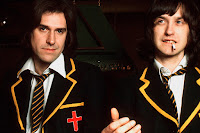 London scrappers Ray and Dave are well respected men with an illustrious career but have never, ever gotten along. They fought onstage and off, and they shitcanned The Kinks decades ago. When Dave had a stroke some years back, there was hope of a reconciliation, but better things between them have not materialized. They each keep playing, just never together.
 The Black Crowes
 This dispute bubbled over in 2008, with lead singer Ali leaving presumably for dollars-and-cents reasons. So now there is UB40 . . . and UB40 Featuring Ali Campbell, Astro and Mickey Virtue (a couple of other original members). Each singing their "own songs," the old stuff. You all know how I feel about fragmented bands touring under their original names. This is doubly dumb.
Lawsuits abound, and there is no end in sight. Brothers have disowned each other. There's a documentary about the split. Can't we all just get along?
Seriously. One of the acts (the one without parenthetical clarification) now has a song called "What happened to UB40." Have a listen if you dare.
Lyrics:
Look. I saw UB40 in 1988 at the Boathouse. Tip. Top. They were damn good musicians playing great reggae harmonies. The decade or two that followed for UB40 featured an over-reliance on watered-down covers of old standards, but their more politically-minded material of the early 80's was good reggae. These guys should get it together -- literally -- and channel their angst into the more spitfire sound of their youth.
Anyway, do NOT go see either version of them until that happens, but in the meantime, be kind to your brothers (and sisters), and check out UB40 below, when they weren't a soft reggae-lite factory of dreck. My preferred tunes of theirs, in order...
The War Between the States was known ignominiously as casting brother vs. brother in the field of battle. It wasn't the only time such a stage was set. Fratres who share DNA and Greek affiliation alike don't always get along, and when they don't, it can be especially ugly.
Especially in rock and roll. A few notorious brother battles:
The Fogertys (John and Tom)
Creedence Clearwater Revival
The Fogerty sons weren't so fortunate, as it turned out. Little brother John rose to prominence as the band's leader, and he both behaved despotically and also led them into one of the classic 60's/70's awful record deals. Tom couldn't stop John's reign, so he bolted, and it all blew up. Someday they would make amends... except Tom died 30 years ago, so someday never came. John's solo act rolls on after four decades.
The Davies (Ray and Dave)
The Kinks
 London scrappers Ray and Dave are well respected men with an illustrious career but have never, ever gotten along. They fought onstage and off, and they shitcanned The Kinks decades ago. When Dave had a stroke some years back, there was hope of a reconciliation, but better things between them have not materialized. They each keep playing, just never together.
The Gallaghers (Noel and Liam)
Oasis
As chronicled a decade ago, these boys can be real douches. Despite a rise to popularity, they spend their lives wallowing in look-back anger and vitriol for the world, especially each other. Their bands are now Beady Eye and Noel Gallagher's High Flying Birds. I'll let you guess whose is whose. I cannot vouch for either.
The Robinsons (Chris and Rich)
 The Black Crowes
The early days of the Crowes were filled with drunken on-stage antics and stories of Chris being hard to handle. They subsequently morphed into a great Southern rock band, but like the others on this list, there has been no remedy for the fraternal in-fighting. They now play in the Chris Robinson Brotherhood and Magpie Salute. I've seen the former and heard good things about the latter. Maybe this is better for both of them.
There are other examples, but I draw your attention to one of the most inane. I obviously can't comment on the behind-the-scenes drama that goes back a generation or two among siblings, but a band that used to have some street cred, then got popular, then cashed in and coasted but was at the very least a fun, lively, talented band to take in . . . well, they've imploded and now there are two separate bands that represent a hole far less great than the sum of its parts.
The Campbells (Ali and Robin)
UB40
 This dispute bubbled over in 2008, with lead singer Ali leaving presumably for dollars-and-cents reasons. So now there is UB40 . . . and UB40 Featuring Ali Campbell, Astro and Mickey Virtue (a couple of other original members). Each singing their "own songs," the old stuff. You all know how I feel about fragmented bands touring under their original names. This is doubly dumb.
Lawsuits abound, and there is no end in sight. Brothers have disowned each other. There's a documentary about the split. Can't we all just get along?
Seriously. One of the acts (the one without parenthetical clarification) now has a song called "What happened to UB40." Have a listen if you dare.
Lyrics:
What Happened to UB40That's . . . something. To all you who said Bob Marley and Yoko Ono would never be name dropped in the same song . . . there you go.
Say what happened to UB40 now
Some off them think dem bigger than Bob Marley WHOA!
Who's who in a the party now
Gould's lurking in the corner now
Some of dem flimsy some of dem
shallow, want dem money in a Wheelbarrow
Dem mind is weak dem mind it Narrow, Little after dat them get para
Three Yoko Ono's so craving, dem want new house new car and tings
Spangles and bangles and Diamond rings,
you can hear them coming dem a J'lingaling
Say what happened to UB40 now
Some off them think dem bigger than Bob Marley WHOA!
Who's who in a the party now
Gould's lurking in the corner now
One Man try fe go Solo, like the explorer Marco Polo
The attendance weak de attendance low
Him have fe stop cause him woulda bruk fe sure...
Your best friend could be your worst
enemy, him a backbiter tun spy tun thief
Him pride broke down say him a creep creep
Oh gosh me bredrin you done know we have fe weep...
Say what happened to UB40 now
Some off them think dem bigger than Bob Marley WHOA!
Who's who in a the party now
Gould's lurking in the corner now
Look. I saw UB40 in 1988 at the Boathouse. Tip. Top. They were damn good musicians playing great reggae harmonies. The decade or two that followed for UB40 featured an over-reliance on watered-down covers of old standards, but their more politically-minded material of the early 80's was good reggae. These guys should get it together -- literally -- and channel their angst into the more spitfire sound of their youth.
Anyway, do NOT go see either version of them until that happens, but in the meantime, be kind to your brothers (and sisters), and check out UB40 below, when they weren't a soft reggae-lite factory of dreck. My preferred tunes of theirs, in order...
Tuesday, April 30, 2019
Lego Beast
People who use their idle time to hone a very, very silly skill and bring a goofy smile or two to the world . . . they are among my favorites.
For Dave
For Marls
For anyone who read this post (and rob)
For Nathanial Hörnblowér
Sunday, April 28, 2019
Crush Groove 2: Katie Lou is Who
Our fondness for former Delaware Blue Hen and current Washington Mystic Elena Delle Donne is long-documented. She's been every bit the stud in the professional ranks as she was in college, averaging 20 points and 7 boards in six professional seasons, and winning the WNBA MVP award in 2015. She still tops the list, number 11 in our program, number one in our hearts.
But she's got some competition.
I don't, as you might imagine, watch a ton of ladies' hoops. Call me shallow, and you might be right, but it also isn't on offer nearly as much as men's. I do, though, try to watch the women's Final Four every year. And this year I was reminded of a player who caught my attention way back when she was a freshman.
UCONN grad Katie Lou Samuelson is a 6'3" wing with a great touch from deep and advanced offensive instincts. She made 41.7% of her three-pointers in college, finishing her career with 371 triples. She scored 18.6 points, pulled down 6.6 boards, and handed out 3.9 assists a game her senior season. She's really fun to watch on the court.
And back to the shallow thing, she's athletic-cute on the court, which is nice. But she looks like this off the court, about which I had no idea (hey, if Shlara gets to objectify Jay Wright, I can think a lady baller is attractive):
Huge Larry Bird fan, to boot, and she just got drafted by the Chicago Sky, the same team that brought Delle Donne into the league. I think it might be fate.
But she's got some competition.
I don't, as you might imagine, watch a ton of ladies' hoops. Call me shallow, and you might be right, but it also isn't on offer nearly as much as men's. I do, though, try to watch the women's Final Four every year. And this year I was reminded of a player who caught my attention way back when she was a freshman.
UCONN grad Katie Lou Samuelson is a 6'3" wing with a great touch from deep and advanced offensive instincts. She made 41.7% of her three-pointers in college, finishing her career with 371 triples. She scored 18.6 points, pulled down 6.6 boards, and handed out 3.9 assists a game her senior season. She's really fun to watch on the court.
And back to the shallow thing, she's athletic-cute on the court, which is nice. But she looks like this off the court, about which I had no idea (hey, if Shlara gets to objectify Jay Wright, I can think a lady baller is attractive):
Huge Larry Bird fan, to boot, and she just got drafted by the Chicago Sky, the same team that brought Delle Donne into the league. I think it might be fate.
Friday, April 26, 2019
Festivus
We're not at all above reposting our own stuff in the service of journalism. By journalism, of course, I mean laziness and lack of inspiration. And since this weekend happens to be the 10th anniversary of one of the great weekends of the tiny dictator's life, it's an excellent excuse to re-up a terrific post.
Well, the longer we wait to post something to do with our jaunt to JazzFest 2009, the more underwhelming it will be. As it is, I can't imagine a blog post that could ever do a great New Orleans weekend justice; if you've never been, there's no capturing the wow-ness of the place. If you have been, discussions of it either don't hold up to your ridiculous memories of the place or piss you off that you missed out.
Anyway . . . the biggest aspect of the weekend may have been the little guy's first foray into the Crescent City. G:TB's own Rob joined me, a couple of W&M folks, and a small horde of my hometown chums at the Fest. I'd say his eyes were sufficiently widened and his horizons sufficiently broadened throughout the weekend. Hell, every time I go back, mine are all over again. For his part, Squirrel truly brought his A-game and then some.
Rather than give you a rundown of our weekend teen journal style -- that would inevitably not make chronological sense due to the fuzzy memory of the journalist (only because so much was going on and I wasn't concentrating on the details of the moment!), I'll just show how R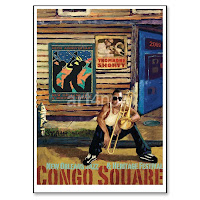 ob found out you can spend 72 hours in that town and still only see a fraction of its offerings.
The Music
What we heard: The best Fest music ever, so says I. For those familiar with New Orleans artists, Galactic, Trombone Shorty, and old fave and redhead fiddler extraordinaire Amanda Shaw really brought it -- in addition to the bunch of great smaller acts who graced the Fais-Do-Do stage. Shorty was a late addition to our viewing docket, since the Drive-By Truckers backing Booker T were hell and gone from our encampment, and he rewarded us with a bang-up, foot-stomping set. Oh, and Amanda Shaw is 18 now, so comments about her aren't (as) creepy.
More well known artists like Spoon and Dave Matthews delivere d the goods as well, but the Avett Brothers and Wilco really lit up their respective stages. Wilco is solidifying its place as the best live band in America right now. And the Avetts . . . well, they do their own thing, and do it well.
What we didn't hear: We took in no live post-Festival music at places like the House of Blues, Tipitina's, Maple Leaf, Howlin' Wolf, or 1,000 other places. We did catch a bit of a band at the Sea Horse Saloon across from the Fest, but according to those not blacked out, I put my feet up and my eyelids down for most of that. Next time, Rob, we'll get you to some of them nighttime joints.
The Food
What we ate: The Bayou Philly at Cooter Brown's was no letdown. I ate some other delectables there off other people's plates, but I can't really remember what or if they were even friends of mine. Cooter's was very fuzzy. (Pun intended.) We also had a killer shrimp/fried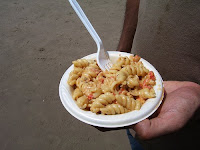 green tomato/remoulade po' boy at a great place called Mahoney's in the Garden District pre-Fest Saturday.
As for the JazzFest food, I feel like Rob really only got a tiny taste (TJ, joke) of it. Crawfish bread and Crawfish Monica are two absolute staples, but the list goes on so far beyond that. Still... they're fucking dynamite.
Oh, and we ate the hell out of Igor's burgers at some point. As the story goes.
What we didn't eat: Jambalaya, crawfish pie, filet gumbo. (I actually ate some gumbo and got most of it on my shirt, but no real worries -- I wore the shirt for two full days and nights, so it was looking awesome anyway.) No meat pie, no red beans & rice, no crawfish sack. (Crawfish sack is underrated, and you can guess why.) No boiled crawdads. Next time, more Fest food, Robert.
The Drink
What we drank: Beer. Assloads of it. Abita Amber. Foster's. Miller Lite. PBR. Heineken. Bud. Red Stripe. I remember drinking a Coors on a bet, I think. Bloody Marys with green beans. A tequila shot followed quickly by a Jager shot. A number of screwdrivers, but only because it was breakfast time (in England).
What we didn't drink: Chivas Regal. Chimay. Zinfandel. Zima. A few other things. And hand grenades, because--
The Place
Where we went: The Fairgrounds for JazzFest. Igors. Rinse. Lat her. Repeat. We did do something I haven't done much in New Orleans, and that's party at some people's place of residence. Some newly made friends of friends had us over once (or twice . . . honestly, Rob, please help me on these logistics).
Where we didn't go: The French Quarter, amazingly. TJ goes to NOLA and never leaves the Quarter, Rob goes and never enters it. I won't speak for him, but I think we did a good job of partying in the Garden District and at and around the Festival, neutralizing any strong desire to head downtown. He still needs to go back if for that alone, but we did just all right without it.
And finally, the strongest performance of the trip:
So we rock it out Friday but hit the hay at a very East Coast not-New Orleans hour (2ish). We get up, head back down to the nextdoor bar (Igor's) and have Bloody Marys. Fest it up again, get shnockered to the gills, do ____ and ____ and maybe ____, then I get fall-down "tired" and go to bed. Midnight. Embarrassing.
I wake up at 5 AM, see that my man the Squirreler is still not back, and call him. He berates me, but I'm just thrilled to know he's still at Igor's. I race downstairs (hence, the clothes don't get changed) and try to redeem myself by drinking at the bar from 5 til noon or so. His two compatriots tag out, and I figure he might need to do the same.
Nope.
He powers through the whole day, not pausing to stop drinking and making it til close to midnight Sunday before he crapped out. Unbelievable. I was actually pleased with my rise-and-shine rock star performance that day (I was a little inspired by seeing my old friend Bryan behind the bar t 5 AM after a 3 years' ban), but I have to tip the cap to the little guy. Such a hearty rookie performance, I overheard one friend's wife proclaim, "Whitney's out, Squirrel's in. Squirrel is the new Whitney." Not sure about all that, but still.
And so the recovery time ensues. We're looking at 2-3 full days before feeling like a human again kicks in. Ugh.
And that's what we did. Most of it. Some of it. I don't know.
Well, the longer we wait to post something to do with our jaunt to JazzFest 2009, the more underwhelming it will be. As it is, I can't imagine a blog post that could ever do a great New Orleans weekend justice; if you've never been, there's no capturing the wow-ness of the place. If you have been, discussions of it either don't hold up to your ridiculous memories of the place or piss you off that you missed out.
Anyway . . . the biggest aspect of the weekend may have been the little guy's first foray into the Crescent City. G:TB's own Rob joined me, a couple of W&M folks, and a small horde of my hometown chums at the Fest. I'd say his eyes were sufficiently widened and his horizons sufficiently broadened throughout the weekend. Hell, every time I go back, mine are all over again. For his part, Squirrel truly brought his A-game and then some.
Rather than give you a rundown of our weekend teen journal style -- that would inevitably not make chronological sense due to the fuzzy memory of the journalist (only because so much was going on and I wasn't concentrating on the details of the moment!), I'll just show how R
 ob found out you can spend 72 hours in that town and still only see a fraction of its offerings.
The Music
What we heard: The best Fest music ever, so says I. For those familiar with New Orleans artists, Galactic, Trombone Shorty, and old fave and redhead fiddler extraordinaire Amanda Shaw really brought it -- in addition to the bunch of great smaller acts who graced the Fais-Do-Do stage. Shorty was a late addition to our viewing docket, since the Drive-By Truckers backing Booker T were hell and gone from our encampment, and he rewarded us with a bang-up, foot-stomping set. Oh, and Amanda Shaw is 18 now, so comments about her aren't (as) creepy.
More well known artists like Spoon and Dave Matthews delivere
 d the goods as well, but the Avett Brothers and Wilco really lit up their respective stages. Wilco is solidifying its place as the best live band in America right now. And the Avetts . . . well, they do their own thing, and do it well.
What we didn't hear: We took in no live post-Festival music at places like the House of Blues, Tipitina's, Maple Leaf, Howlin' Wolf, or 1,000 other places. We did catch a bit of a band at the Sea Horse Saloon across from the Fest, but according to those not blacked out, I put my feet up and my eyelids down for most of that. Next time, Rob, we'll get you to some of them nighttime joints.
The Food
What we ate: The Bayou Philly at Cooter Brown's was no letdown. I ate some other delectables there off other people's plates, but I can't really remember what or if they were even friends of mine. Cooter's was very fuzzy. (Pun intended.) We also had a killer shrimp/fried
 green tomato/remoulade po' boy at a great place called Mahoney's in the Garden District pre-Fest Saturday.
As for the JazzFest food, I feel like Rob really only got a tiny taste (TJ, joke) of it. Crawfish bread and Crawfish Monica are two absolute staples, but the list goes on so far beyond that. Still... they're fucking dynamite.
Oh, and we ate the hell out of Igor's burgers at some point. As the story goes.
What we didn't eat: Jambalaya, crawfish pie, filet gumbo. (I actually ate some gumbo and got most of it on my shirt, but no real worries -- I wore the shirt for two full days and nights, so it was looking awesome anyway.) No meat pie, no red beans & rice, no crawfish sack. (Crawfish sack is underrated, and you can guess why.) No boiled crawdads. Next time, more Fest food, Robert.
The Drink
What we drank: Beer. Assloads of it. Abita Amber. Foster's. Miller Lite.
 PBR. Heineken. Bud. Red Stripe. I remember drinking a Coors on a bet, I think. Bloody Marys with green beans. A tequila shot followed quickly by a Jager shot. A number of screwdrivers, but only because it was breakfast time (in England).
What we didn't drink: Chivas Regal. Chimay. Zinfandel. Zima. A few other things. And hand grenades, because--
The Place
Where we went: The Fairgrounds for JazzFest. Igors. Rinse. Lat
 her. Repeat. We did do something I haven't done much in New Orleans, and that's party at some people's place of residence. Some newly made friends of friends had us over once (or twice . . . honestly, Rob, please help me on these logistics).
Where we didn't go: The French Quarter, amazingly. TJ goes to NOLA and never leaves the Quarter, Rob goes and never enters it. I won't speak for him, but I think we did a good job of partying in the Garden District and at and around the Festival, neutralizing any strong desire to head downtown. He still needs to go back if for that alone, but we did just all right without it.
And finally, the strongest performance of the trip:
So
 we rock it out Friday but hit the hay at a very East Coast not-New Orleans hour (2ish). We get up, head back down to the nextdoor bar (Igor's) and have Bloody Marys. Fest it up again, get shnockered to the gills, do ____ and ____ and maybe ____, then I get fall-down "tired" and go to bed. Midnight. Embarrassing.
I wake up at 5 AM, see that my man the Squirreler is still not back, and call him. He berates me, but I'm just thrilled to know he's still at Igor's. I race downstairs (hence, the clothes don't get changed) and try to redeem myself by drinking at the bar from 5 til noon or so. His two compatriots tag out, and I figure he might need to do the same.
Nope.
He powers through the whole day, not pausing to stop drinking and making it til close to midnight Sunday before he crapped out. Unbelievable. I was actually pleased with my rise-and-shine rock star performance that day (I was a little inspired by seeing my old friend Bryan behind the bar t 5 AM after a 3 years' ban), but I have to tip the cap to the little guy. Such a hearty rookie performance, I overheard one friend's wife proclaim, "Whitney's out, Squirrel's in. Squirrel is the new Whitney." Not sure about all that, but still.
And so the recovery time ensues. We're looking at 2-3 full days before feeling like a human again kicks in. Ugh.
And that's what we did. Most of it. Some of it. I don't know.
Wednesday, April 24, 2019
Sentence of a Different Dave
Now that we no longer have the daily distraction of Dave's sentences/book reports, we turn to other sources for our bibliographical updates. Today, our man in the OBX wants us to learn some hard stuff.
 I love my country as much as the next person. I wish that collectively we were a little less grabby, a little more compassionate, and not so cocksure of the superiority of all things American. But overall, my life and that of many friends have been a blessing.
Not so for all Americans. Native Americans were pushed off of their lands and herded onto reservations. Black Americans, many of whose ancestors arrived here in bondage, are far more likely to be arrested, jailed, killed and die in childbirth than whites. On average, black people have accumulated a fraction of the wealth of whites.
The last point gets to the heart of a remarkable book that I came across – The Half Has Never Been Told. Cornell history professor Edward Baptist argues quite convincingly that slavery wasn’t simply a practice confined to the agrarian South, but the engine that jump-started the American global economy. Slavery drove the country’s southward and westward expansion, and turned a fledgling coastal republic into a world player.
The book is compelling, eye-opening, infuriating and heartbreaking. It’s weighty, but accessible, with a rich narrative alongside charts, graphs, maps and statistics. It is exhaustively researched and meticulously footnoted. It took Baptist more than 12 years to research and write, in part he said because he was trying to re-wire the way U.S. history is understood. He wrote in an afterword:
“I was trying to center American history on the exploitation, movement, and disruption of African-American bodies, lives, and families … As I learned in my research, there was a concrete relationship between African-American suffering and economic growth: the more that enslaved people were tortured, the more efficiently they produced the new global economy’s most essential commodity. Through the cotton enslaved people made – cotton they were forced to make in an ever-more-productive fashion – African-Americans enriched almost all people in the world. Almost all people, but not themselves.”
A few nuggets: In 1810, there were approximately 1,191,000 slaves in the U.S.; by 1860, that number jumped to 3,953,000. Slave ownership accounted for 18.9 percent of total U.S. wealth in 1860, as they were treated as a commodity. In 1800, enslaved African-Americans produced 1.4 million pounds of cotton; by 1860 in a westward expanded nation, slaves produced 2 billion pounds of cotton. Cotton accounted for 61 percent of all U.S. exports in 1860, and 88 percent of the cotton imported to Great Britain.
 The book title comes from an interview that a Hampton University student, Claude Anderson, conducted with a retired schoolteacher, Lorenzo Ivy, in Danville, Va., in 1937. The interview was part of dozens of projects begun by FDR’s Works Progress Administration (WPA) designed to help pull the country out of the Great Depression. Men like Anderson interviewed older Americans to get a fuller picture of the history and lives of the country. He had a sanitized list of questions to ask, prepared by white bureaucrats, about slavery and its effects. Instead of following the script, Ivy, born 11 years before the start of the Civil War, volunteered what he had seen, what he and his family and their friends endured. Black people bought and sold. Men and women beaten, whipped and raped. Families separated. Men shackled in chains walking miles to railroad stations, where they were herded like cattle and shipped off to work plantations and fields. Then Ivy said, “Truly, son, the half has never been told.”
The book came out in 2014, was widely acclaimed in publishing and academic circles, and won a handful of awards. It deserves a broader run. I suspect the reason it hasn’t is because it’s a scholarly work and because it’s an uncomfortable topic. Race relations and the treatment of black and native populations are the country’s original sin. It’s difficult enough to have honest, informed discussions about race amid conventional wisdom and our broadly accepted idea of slavery’s place in our country. But to have a historian argue, with much proof behind him, that slavery wasn’t merely a regional horror ended by the Civil War, but a foundational aspect of the entire country that benefited whites in the north and south alike and as far away as western Europe, that’s a seismic shift for a nation founded on the idea of freedom and liberty.
Baptist’s book isn’t easy reading, but it’s worthwhile reading.
 I love my country as much as the next person. I wish that collectively we were a little less grabby, a little more compassionate, and not so cocksure of the superiority of all things American. But overall, my life and that of many friends have been a blessing.
Not so for all Americans. Native Americans were pushed off of their lands and herded onto reservations. Black Americans, many of whose ancestors arrived here in bondage, are far more likely to be arrested, jailed, killed and die in childbirth than whites. On average, black people have accumulated a fraction of the wealth of whites.
The last point gets to the heart of a remarkable book that I came across – The Half Has Never Been Told. Cornell history professor Edward Baptist argues quite convincingly that slavery wasn’t simply a practice confined to the agrarian South, but the engine that jump-started the American global economy. Slavery drove the country’s southward and westward expansion, and turned a fledgling coastal republic into a world player.
The book is compelling, eye-opening, infuriating and heartbreaking. It’s weighty, but accessible, with a rich narrative alongside charts, graphs, maps and statistics. It is exhaustively researched and meticulously footnoted. It took Baptist more than 12 years to research and write, in part he said because he was trying to re-wire the way U.S. history is understood. He wrote in an afterword:
“I was trying to center American history on the exploitation, movement, and disruption of African-American bodies, lives, and families … As I learned in my research, there was a concrete relationship between African-American suffering and economic growth: the more that enslaved people were tortured, the more efficiently they produced the new global economy’s most essential commodity. Through the cotton enslaved people made – cotton they were forced to make in an ever-more-productive fashion – African-Americans enriched almost all people in the world. Almost all people, but not themselves.”
A few nuggets: In 1810, there were approximately 1,191,000 slaves in the U.S.; by 1860, that number jumped to 3,953,000. Slave ownership accounted for 18.9 percent of total U.S. wealth in 1860, as they were treated as a commodity. In 1800, enslaved African-Americans produced 1.4 million pounds of cotton; by 1860 in a westward expanded nation, slaves produced 2 billion pounds of cotton. Cotton accounted for 61 percent of all U.S. exports in 1860, and 88 percent of the cotton imported to Great Britain.
 The book title comes from an interview that a Hampton University student, Claude Anderson, conducted with a retired schoolteacher, Lorenzo Ivy, in Danville, Va., in 1937. The interview was part of dozens of projects begun by FDR’s Works Progress Administration (WPA) designed to help pull the country out of the Great Depression. Men like Anderson interviewed older Americans to get a fuller picture of the history and lives of the country. He had a sanitized list of questions to ask, prepared by white bureaucrats, about slavery and its effects. Instead of following the script, Ivy, born 11 years before the start of the Civil War, volunteered what he had seen, what he and his family and their friends endured. Black people bought and sold. Men and women beaten, whipped and raped. Families separated. Men shackled in chains walking miles to railroad stations, where they were herded like cattle and shipped off to work plantations and fields. Then Ivy said, “Truly, son, the half has never been told.”
The book came out in 2014, was widely acclaimed in publishing and academic circles, and won a handful of awards. It deserves a broader run. I suspect the reason it hasn’t is because it’s a scholarly work and because it’s an uncomfortable topic. Race relations and the treatment of black and native populations are the country’s original sin. It’s difficult enough to have honest, informed discussions about race amid conventional wisdom and our broadly accepted idea of slavery’s place in our country. But to have a historian argue, with much proof behind him, that slavery wasn’t merely a regional horror ended by the Civil War, but a foundational aspect of the entire country that benefited whites in the north and south alike and as far away as western Europe, that’s a seismic shift for a nation founded on the idea of freedom and liberty.
Baptist’s book isn’t easy reading, but it’s worthwhile reading.
Subscribe to:
Posts (Atom)

 Posts
Posts

