Showing posts with label Octopus. Show all posts

Monday, October 11, 2021

Consider the Cephalopod

There’s value in information that broadens awareness about a subject or being, and I don’t mean John Mulaney or Instagram. In this instance: We should quit fucking with octopuses, and certainly stop killing and eating them. 

Octopuses are among the planet’s distinct creatures. Intelligent, curious, pliant, adaptable, tender, freakishly strong, a wonder. All of that is made clear in “The Soul of an Octopus,” by naturalist Sy Montgomery. I’m late to it, as it came out in 2015 and was a finalist for the National Book Award. It’s a cool, light read. 

Octopuses have a bad rap, portrayed as monsters in literature, movies and sea-faring lore. Think Jules Verne, the Kraken, and wildly exaggerated tales of whale-sized octopuses attacking and destroying ships. It’s understandable, given that they’re about as physically dis-similar to human beings as imaginable, maybe as close to an alien being on Earth as you’ll find. 

Some folks freak when touched by an octopus, because it’s such a peculiar sensation. They’re invertebrates. They’re slimy. They have three hearts. Their mouths are located between their legs and are like a parrot’s beak. They taste and grasp and identify with the suckers on their tentacles, which often move independent of each other. Their brains are essentially wrapped around their throats. Their blood is blue. They are capable of releasing a neurotoxin. They squirt ink to deal with both predators and prey. They can change colors and shapes and skin texture in split seconds. They can squeeze into impossibly small spaces (a 50-pound octopus whose tentacles stretch five feet can fit through a space the size of an orange). They possess a funnel that they use to propel themselves and to shoot water at people and other creatures. 

Yet researchers who work with them find that they have personalities. They can be aggressive or chill, shy or playful, disinterested or engaging. They change color not just to camouflage themselves, but when they’re content or anxious or fearful. They recognize and remember people. 

There’s a story about one octopus at an aquarium that routinely squirted one of its handlers. The woman left for another job, and when she returned to visit months later, the octopus squirted her again. It had squirted no one else since she left. 

In one experiment, two unfamiliar handlers dressed identically. One brought food, the other gently poked the octopus with a bristly stick. Within a week, the octopus recognized the two on sight and went toward the feeder and away from the irritator, even when neither was carrying food or a stick. 

Though octopuses’ eyes work like a human’s, they are pretty much color-blind, which makes their ability to change color and camouflage themselves all the more remarkable. How do they know what colors to turn? 

Researchers think that their arms help them “see” because they are so sensitive and receptive. An octopus has about 300 million neurons, three-fifths of which are in their arms rather than their brains (a rat has 200 million neurons, humans about 100 billion neurons in their brains). Where humans have four distinct lobes in their brains, octopuses have 50 to 75, depending on size and species, which permits enormous multi-tasking. 

One neuroscientist quoted in the book said: “Short of Martians showing up and offering themselves to science, cephalopods are the only example outside of vertebrates of how to build a clever, complex brain.” 

Octopuses (the plural is not octopi – ‘i’ is a Latin plural ending, while ‘octopus’ is derived from a Greek word, and you aren’t supposed to mix the two) can untie knots and undo latches and open jars. At one aquarium, an octopus played with a small plastic ball that could be screwed and unscrewed in half. One handler put food inside the ball. The octopus not only unscrewed the ball to get the food, but screwed it back together when finished. They use their suckers to taste and probe and gather information, and they can pinch them together as humans do their thumb and forefinger. A two-inch sucker on a large octopus is capable of lifting 20-to-30 pounds. As octopuses have hundreds of suckers – smaller at the tips of their tentacles, larger toward their bodies – they possess tremendous strength. Divers and handlers know to be extremely cautious with them, as larger octopuses can overpower a person, though it’s more out of curiosity than malice. 

In 2012, a group of neuroscientists at the Cambridge (UK) Declaration on Consciousness issued a proclamation that included: “The weight of evidence indicates that humans are not unique in possessing the neurological substrates that generate consciousness. Non-human animals, including all mammals and birds, and many other creatures, including octopuses, also possess these neurological substrates.” As we gradually bake and submerge the planet, it strikes me that the whole dominion-over-all-creatures thing will become moot. All hands, and arms, on deck. And another intelligent species has far greater value than whether it’s better grilled or sauteed.

Monday, September 05, 2016

zTravelogue: I Know It When I See It, Especially At Dinner Time

I didn't consume only western media and Japanese pop culture on my trip to Osaka, I consumed lots of food. Lots of really really good food, mostly seafood. The quality of the food alone makes Japan a worthwhile vacation destination. And I had work-related meals every night I was there so I got to see a broad range of good authentic Japanese cuisine. Here are some highlights.

I went to dinner with some Bostonians my first night in Osaka. They wanted to go to the Dotonbori neighborhood because "it's the Times Square of Osaka!!" I bit my tongue and went along with it. Lots of neon, lots of bootleg t-shirts, lots of tourists. Yep, it's the Times Square of Osaka!! But there are plenty of good restaurants. We went to Chibo, a spot that specializes in okonomiyaki, which is sort of like a cross between an omelette and a pancake stuffed with seafood and coated with mayonnaise and barbecue sauce. It's much better than it sounds. Perhaps unsurprisingly, the chef isn't Jewish and doesn't take Leviticus seriously--everything contained shellfish, pork, and/or meat with cheese. I got the "number one" which has cuttlefish, octopus, scallops and a giant prawn sticking out of it:


The next morning I went to the hotel's complimentary breakfast buffet:


Fish and pickled vegetables for breakfast! Miso soup too. I'm a shameless caffeine addict so I washed it all down with coffee, which was surprisingly and uniformly excellent throughout Osaka. I got used to this combination after a day or two.

I tried big sushi plates twice. The first was at an upscale shopping center:


It was very good although not the best I ever had. It's more like the clean, refined flavors of Yasuda than the bold Americanized fusion stuff you get at Nobu or O Ya. There were a few noteworthy differences. The wasabi is completely different from the wasabi you get here, aside from its color. Taste, texture, solubility, consistency, you name it it's different. The wasabi is always complemented with these little red flowers, which you're supposed to put on the sushi along with the wasabi. Sometimes you get a pile of chunky sea salt which also belongs on the food (they include this salt with lots of stuff, not just sushi).

Later I went to dinner with two guys I know very well. They're native Osakans in their mid-to-late thirties so they took me to a cool neighborhood with lots of trendy restaurants and young people. We ate and drank our asses off at The Swimming Squid. Highlights include some of the best sushi I've ever had:


The pink strips on the left are fatty tuna, and they absolutely destroy the stuff we call fatty tuna here. It dissolves in your mouth like a fishy communion wafer and it's just as religious an experience. Indeed, if a food can become the body of Christ then the fatty tuna at The Swimming Squid is mostly likely the Messiah.

The white fluffy looking stuff on the bottom left isn't rice, it's sweetfish carefully chopped all the way through the meat but not the skin, so they can turn it inside out and make it look like rice. Apparently this is a traditional way to prepare it in Osaka. The three solid white fish are cuttlefish, squid, an octopus. I can't remember all the other fish but they were outstanding.

They ordered some stuff expressly to gross me out but with no success. One such dish is made as follows: take a squid and hit him with a mallet so he's stunned. Then take a knife and cut him into strips. Slide everything on the cutting board into a bowl. It looks like this:


It was very salty but not bad. The bowl clearly contained ink and other squidly fluids, some of which I don't want to ponder too deeply (like squid shit and squid jizz).

Another gross-out attempt was dried ray wing. They cut the wings off of stingrays and dry them like jerky. They serve them with an open flame so that you can heat them to make them soft, then you dip them into mayonnaise. I liked it.


The final and allegedly grossest course was giant fish eggs on rice. One of my friends was absolutely stunned that I scarfed it down.


I said "What's the big deal, it's just fish eggs and rice" to which he replied "That's not rice."


Turns out the rice were baby sardines or something similar. I don't see why this is any grosser than eating full-grown sardines so I kept on munching. It was really tasty.

This segues nicely into my favorite aspect of Japanese cuisine: what you're eating often looks the same as it did when it was alive. You know it when you see it! Like this squid dish:


And this sweetfish dish:


The only truly unsettling part of a Japanese meal is the alcohol. Every meal starts with beer, which over there is really malt liquor. From there you move to saki and then shochu, which is sort of like a 60 proof vodka made typically from rice (although the stuff made from chestnuts is faaaaaaantastic). After this approach was explained to me at my first big dinner, I blurted out "So we're doing beer before liquor?!?" which made my fellow Americans smile and my hosts reply with a matter-of-fact "Yes."

If you ever go to Japan I encourage you to keep an open mind when it comes to food and try everything you can no matter how intimidating. You never know when you'll stumble across a hidden gem like aloe yogurt!

Monday, December 21, 2015

The Twelve Days of Gheorghemas: Day Seven

On the seventh day of Gheorghemas, Big Gheorghe gave to me:

Seven books for reading
6.9 Non Sequiturs
Six All-Star Nods
Five podcasts for listening
Four posts zman meant to write but never did
Three French Hens
Two in-state rivalries
And a dork with a split personal-ity


This is year three of my "seven books for reading" post, so now I've got some big data to evaluate. In 2013, I read approximately twenty-three books. In 2014, I read approximately forty-six books. This year I split the difference and read approximately thirty-three books. It's much easier for me to figure this out these days . . . thanks to T.J.'s gentle encouragement, I've finally learned to use the "labels" feature on Blogger.

It's always hard to choose the seven best, as all the books I finished were pretty damned good . . . that's why I finished them. I'm a finicky reader, and I start more books than I finish. Here are the seven most memorable.

1) Beyond Words: What Animals Think and Feel (Carl Safina)


The most significant and groundbreaking book on the list. Comprehensive, and a bit of a bear to get through (especially the first two sections, which focus on elephants and wolves) but I promise it will be worth it, and you'll never look at your dog in the same way again.

2) Savage Harvest: A Tale of Cannibals, Colonialism, and Michael Rockefeller's Tragic Quest for Primitive Art (Carl Hoffman)


The title says it all. Rich kids and cannibals mix like oil and water.

3) Dreamland: The True Tale of America's Opiate Epidemic (Sam Quinones)

Astounding journalism. America does a lot of drugs. Mexico produces a lot of drugs. God is in the details. The book inspired this song.

4) The Cartel (Don Winslow)

I can't get enough of Don Winslow, and I can't get enough of the Mexican drug trade. Part fact and part fiction, the sequel to The Power of the Dog, and a perfect companion to the previous book.

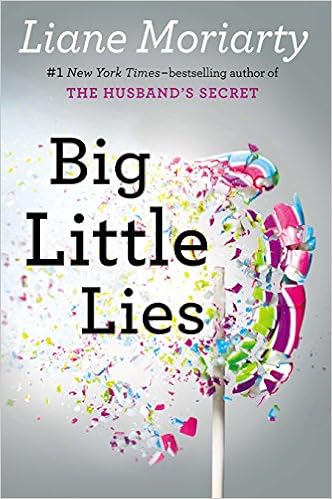
5) Big Little Lies (Liane Moriarty)


The Australian version of Mean Girls . . . except with mean moms.

6) Dancing With the Devil in the City of God: Rio de Janeiro on the Brink (Juliana Barbassa)

An honest and dynamic portrait of Rio . . . if you've seen City of God, you'll love this book.


7) City of Bones (Michael Connelly)

I'm choosing this particular Michael Connelly novel over all the other ones I have read only because it features the La Brea Tar Pits. I've read a number of his Harry Bosch crime procedurals and they're all fantastic (I'm in the middle of Trunk Music right now).


Before my list of all the books I finished, I'll give you something more interesting and less annoying: here are a few of the books I didn't finish . . .

1) Walter R. Borneman's 1812: The War That Forged a Nation

I really wanted to finish this book and become an expert on the War of 1812, but I couldn't read more than two paragraphs in a row before falling into a very deep sleep.

2) The Witches: Salem, 1692 (Stacy Schiff)

I was really excited to read this book, and I've never been so disappointed. After a beautifully written start, about how alienated and lonesome the Puritans were, strangers in a strange land, living in small dark smoky houses, describing events as if they were on a "low grade acid trip," this book devolves into fragmented declarative sentences of historical minutia, with no overarching structure or theme. I think Schiff's research possessed her soul and destroyed it.

3) Purity (Jonathan Franzen)

Another one I was excited about, but I'll never read Jonathan Franzen again. His characters are wooden, repetitive and despicable, and while he writes great sentences, I'm not sure he knows shit about human nature. I'd rather spend my time reading well-researched non-fiction.

4) Sy Montgomery's book The Soul of an Octopus: A Surprising Exploration into the Wonder of Consciousness

Well-written and fascinating, but just too much octopus.

Here's the list of the books I finished in 2015:

Savage Harvest: A Tale of Cannibals, Colonialism, and Michael Rockefeller's Tragic Quest for Primitive Art (Carl Hoffman)

Big Little Lies (Liane Moriarty)

The Best American Science and Nature Writing (2014 Edition)

The Happiest People in the World (Brock Clark)

Building a Better Teacher: How Teaching Works (and How to Teach It to Everyone) (Elizabeth Green)

The Fifth Witness (Michael Connelly)

City of Bones (Michael Connelly)

The Drop (Michael Connelly)

The Black Ice (Michael Connelly)

The Concrete Blonde (Michael Connelly)

The Last Coyote (Michael Connelly)

Skeleton Road (Val McDermid)

Why Does the World Exist? An Existential Detective Story (Jim Holt)

When to Rob a Bank and 131 More Warped Suggestions and Well-intentioned Rants (Levitt and Dubner)

The Husband's Secret (Liane Moriarty)

Dreamland: The True Tale of America's Opiate Epidemic (Sam Quinones)

How We Learn: The Surprising Truth About When, Where and Why It Happens (Benedict Carey)

The Next Species: The Future of Evolution in the Aftermath of Man (Michael Tennesen)

The Son (Jo Nesbo)

The Cartel (Don Winslow)

What Alice Forgot (Liane Moriarty)

Breakfast of Champions (Kurt Vonnegut)

Joyland (Stephen King)

Tell No One (Harlan Coben)

Dancing With the Devil in the City of God: Rio de Janeiro on the Brink (Juliana Barbassa)

Finders Keepers (Stephen King)

The Hand That Feeds You (Amy Hempel and Jill Ciment)

Before the Storm: Barry Goldwater and the Unmaking of the American Consensus (Rick Perlstein)

The Captive Condition (Kevin P. Keating)

Beyond Words: What Animals Think and Feel (Carl Safina)

The Dick Gibson Show (Stanley Elkin)

A Doll's House (Henrik Ibsen)

Overwhelmed: Work, Love and Play When No one Has the Time (Brigid Schulte)